
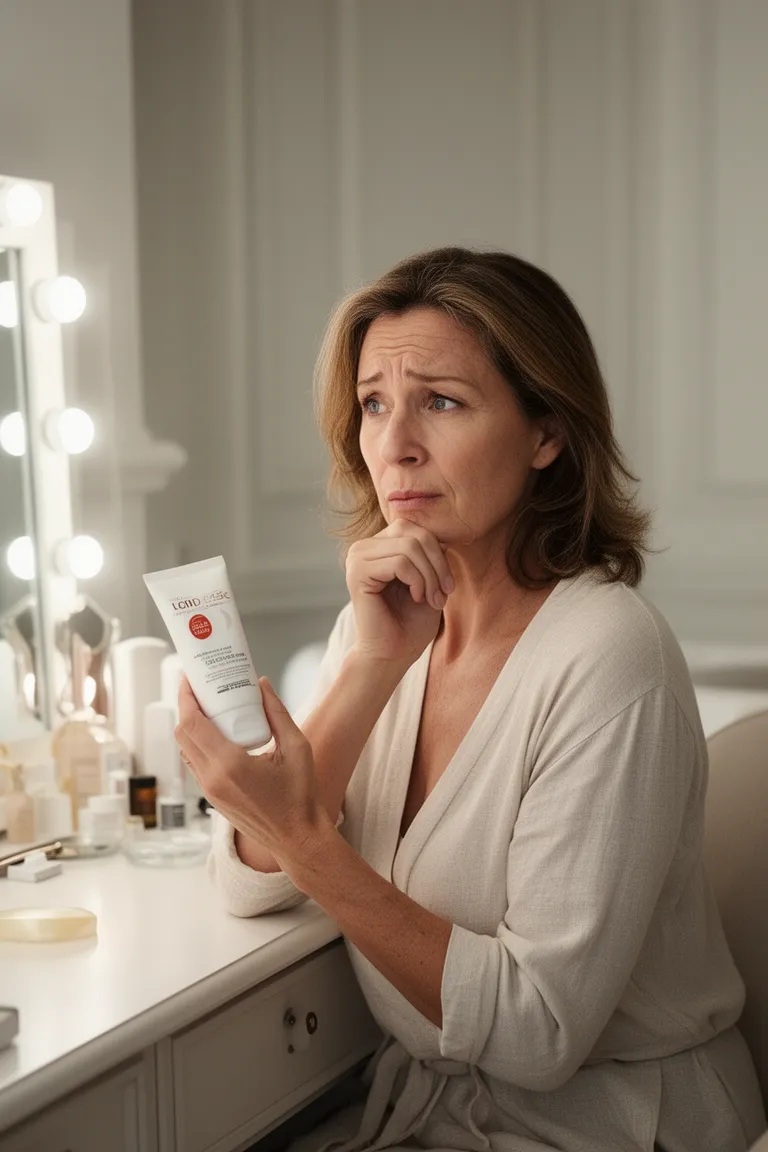
I’ve always been the type of person who reads the labels. Whether it’s groceries, cleaning products, or, most importantly, my skincare, I need to know what I’m putting on my skin. At 48, my skin feels like a living diary of my life—fine lines are less like scribbles and more like permanent ink, and the quest for a bit of that youthful glow feels increasingly urgent. After months of quietly researching anti-aging creams that promised real, non-invasive results, I kept circling back to Skinception. The before-and-after photos spoke to me, and the ingredient list seemed to understand the delicate balance my skin now needed. I was ready to invest. My first instinct, like for almost everything else in my life, was to head to Amazon. Click, add to cart, done. Simple, right?
That’s when my simple plan fell apart. I’m not one to buy without checking reviews, so I scrolled. And scrolled. What I found wasn’t the reassuring consensus I’d hoped for. It was a chaotic split between glowing five-star reviews that felt oddly generic and alarming one-star warnings that made my heart sink. People talked about receiving jars that looked “off,” with broken seals or a strange, separated consistency. Others mentioned no results at all, suspecting they’d gotten a watered-down or completely fake product. One review, in particular, stuck with me: “Expired by two years. Wasted my money and now I’m scared to use it.” That was the moment a knot of pure anxiety tightened in my stomach. This wasn’t just about convenience anymore; it was a potential minefield for my skin and my wallet. It was the sinking realization that my pursuit of self-care could backfire spectacularly.
Suddenly, my quest for youthful, radiant skin had turned into a detective mission. The sheer convenience of Amazon was now shadowed by a deep-seated fear of fraud. I realized that for a premium, results-driven product like this, the “easy button” might be the riskiest choice of all. This is the story of how I navigated that fear, what I discovered about buying Skinception online official store vs Amazon, and how I finally found a way to get the real thing without that gnawing pit in my stomach.
My Initial Excitement Turned to Dread: Why Amazon Wasn't the Easy Answer for Skinception
The allure of convenience is powerful, especially when you’re juggling a career, a family, and the relentless pace of life. Amazon has trained us to expect two-day delivery and one-click solutions for everything from paper towels to pressure cookers. So, when I mentally committed to trying Skinception, it felt like a no-brainer. I’d have it by the weekend, incorporate it into my Sunday night ritual, and start my journey. But that initial excitement evaporated faster than a mist of rosewater.
As I dug deeper into the reviews, the red flags weren’t subtle; they were flashing neon signs. Reviewers meticulously pointed out inconsistencies in packaging—labels that were slightly misaligned, fonts that looked a hair too thin, boxes that felt flimsy and cheap compared to the crisp, official images on the brand’s site. Several mentioned a complete lack of the unique batch code or expiration date, or codes that were smudged and unreadable. The most chilling comments, though, were from people who said the cream caused unexpected redness, itching, or breakouts—reactions they hadn’t experienced with a sample they’d gotten from a dermatologist or a trusted retailer. One person wrote, “It smelled like old crayons, not like the light, fresh scent I’d read about.” That detail felt so personal, so real.
I started reading between the lines of the positive reviews, too. So many were vague, just saying “Great product!” or “Works amazing!” without any personal detail about their skin type, their age, or the specific changes they saw. It felt like I was trying to find a genuine voice in a crowded room of echoes. This wasn’t just about a few bad apples in a barrel; it felt like the barrel itself might be suspect. My experience buying Skinception from Amazon, before I’d even clicked “buy,” was already one of profound distrust. I had to ask myself: was saving a few dollars and two days of shipping worth the gamble of getting an expired or counterfeit product that could set my skin back months? The answer, felt deep in my gut, was a resounding no.
The Hidden Dangers of Counterfeit Skincare: What I Learned About Protecting My Investment (and My Skin)
This little investigation led me down a rabbit hole I never expected to explore. What started as simple buyer’s caution turned into a sobering education on the shadowy world of counterfeit cosmetics. I learned it’s not just a financial scam—a bummer of wasted money—it’s a genuine health hazard. These fake products are often manufactured in unregulated facilities with zero oversight. The ingredients are a mystery cocktail. To mimic the texture, they might use cheap fillers like mineral oil or heavy waxes that clog pores. To preserve it, they could use harmful, banned preservatives. Worst-case scenarios included products contaminated with bacteria from unsanitary conditions, or even toxic substances like lead, mercury, or arsenic.
The idea hit me differently because of my age. My skin isn’t the resilient canvas it was at 25. It’s drier, more sensitive, and the barrier function isn’t what it used to be. Applying an unknown, potentially harmful substance to my face felt like playing Russian roulette with my complexion. I thought about the years I’ve spent building a gentle, effective routine to combat dryness and sensitivity. The hundreds spent on serums and moisturizers to strengthen my skin’s barrier. The idea of undoing all that careful work, or causing lasting damage like contact dermatitis or hyperpigmentation, because I wanted to save a few minutes on a purchase was utterly sobering. Cognitive therapy: current status and future directions.
An unauthorized seller doesn’t care about your skin’s microbiome, the stability of active ingredients like peptides and growth factors, or the pH balance of the formula. They care about profit. This realization shifted my entire perspective. Buying the real Skinception wasn’t just a purchase; it was a necessity for safety. Protecting my investment meant more than just getting the cream I paid for—it meant protecting the only skin I have, the one that has to carry me through the rest of my life.
Navigating the Maze: A Real-World Comparison of Where to Shop
I decided to get systematic. I opened two browser tabs: one for the Skinception page on Amazon and one for the official Skinception website. I approached it like I was comparing two job candidates for the most important role of all: caretaker of my face. The differences, once I looked for them, were stark, and they went far beyond the product photo.
On the official site, the entire experience was built on assurance. The language was about purity, clinical research, and guaranteed authenticity. They had detailed sections about their sourcing, high-resolution images of their security seals and holograms, and a clear, direct line to customer support. Their return policy was transparent and focused on customer satisfaction. It felt like a relationship.
On Amazon, I was immediately confronted with a fractured landscape. There were multiple sellers listing the same product. Some were named “Skinception Store,” but a quick click revealed they were third-party vendors with ratings built on selling phone cases and kitchen gadgets, not skincare. The question, “is Skinception on Amazon real or fake?” became a swirling, unanswerable vortex. Who was I actually buying from? A liquidator selling old, expired stock from a bankrupt pharmacy? A counterfeiter operating a convincing storefront? There was no way to know for sure, and that “not knowing” was the core of my anxiety.
| Purchasing Approach | Best For | Realistic Peace of Mind | Key Consideration |
|---|---|---|---|
| Major Online Marketplaces (e.g., Amazon, eBay) | Shoppers prioritizing speed and lowest possible price above all else. | Low to Very Low. Requires intense detective work on seller history and product commingling. | Highest risk of counterfeit or expired goods. Customer service can be a labyrinth. |
| Unauthorized Discount Beauty Sites | Bargain hunters willing to take significant risks for a deep discount. | Very Low. Little to no brand oversight or quality control. | Often the source of expired, tampered, or fake products. No guarantee of authenticity. |
| Authorized Retailers & Department Stores | Shoppers who want a legitimate product with the option of in-person return. | High. Stock comes directly from brand distributors. | Good option, but selection may be limited. Pricing is usually at MSRP. |
| The Official Brand Website | Discerning buyers who value guaranteed authenticity, full support, and a direct brand relationship. | Highest. You are buying from the source itself. | The gold standard for authenticity and customer care. Often the only place for current formulations and promotions. |
The clincher, for me, was the umbrella of customer service. If I had a question about ingredients or application from the official store, I could contact the company that made it. If my jar arrived damaged, they’d handle it directly. With an Amazon purchase from a third-party seller, I’d be navigating Amazon’s A-to-Z Guarantee, hoping the seller would respond, dealing with generic return labels, and praying the replacement wouldn’t be from the same bad batch. For a premium skincare purchase—something I was putting on my face every day—that layer of uncertainty and hassle was unacceptable. The official source advantage wasn’t just about the cream in the jar; it was about the entire ecosystem of trust and support wrapped around it.
How I Finally Got the Real Skinception (And Why It Was Worth the Extra Step)
So, I closed the Amazon tab. I took a deep breath, quieted that little voice that whined about two-day shipping, and navigated directly to the official website. The process was almost anti-climactically straightforward—select your product, add to cart, check out, and wait for the confirmation email. Was it as fast as Amazon Prime? No. The shipping took about five business days. But the peace of mind was immediate and profound. I knew, without a shadow of a doubt, exactly where my product was coming from. The money was going to the people who actually developed the formula, not a random middleman of dubious reputation. dermatologist recommended anti wrinkle cream
When the package arrived, it felt different. It wasn’t just a box tossed in a poly mailer. The packaging was pristine, the cardboard sturdy. The security seal was a perfect, unbroken hologram. The batch code and expiration date were laser-printed, clear as day. Opening it, I found the authentic Skinception cream—the texture was luxuriously rich and exactly as described, with a subtle, clean, almost clinical scent, not perfumey. This was it. The real thing.
Using it for the first time that night was an experience entirely free of anxiety. I wasn’t nervously patching testing; I applied it as directed, feeling the quality. My skin drank it in with no tingling, no redness, just instant hydration. More importantly, the psychological burden lifted. I wasn’t waiting for a bad reaction; I was starting a hopeful routine. Within a few weeks, I began to notice the subtle changes I’d dared to hope for: a brighter, more “awake” complexion in the morning and a softening of those persistent lines around my eyes. The results weren’t a magic eraser, but a gentle, progressive improvement. The “extra step” of buying direct didn’t feel like a hassle anymore; it felt like the essential, respectful first step of a successful skincare journey. I finally understood that for products that truly work, integrity in the purchase is part of the efficacy. restore skin elasticity after 40 naturally
Beyond the Jar: What This Taught Me About Skincare After 40
This whole saga taught me something far bigger than just where to click “checkout.” It clarified what we, as women navigating the shifting landscape of our skin in our 40s and beyond, should really be prioritizing. Our focus shouldn’t be solely on hunting for the single miracle cream with the most five-star reviews. It should be on cultivating a relationship with consistency, quality, and trust.
A counterfeit or expired product doesn’t just fail to work—it actively breaks the trust in your entire routine. It makes you doubt the process, question your own judgment, and can physically set your skin back, forcing you to repair damage before you can even think about improvement. I started to see my skincare ritual as a non-negotiable form of self-respect. Using a genuine, well-formulated product is an act of intentional care. It sends a quiet message to yourself that your time, your health, and your results matter too much to leave to chance. When you use something authentic, you’re not just applying a cream; you’re investing in a process backed by real science and tangible integrity. That mindset shift, born entirely from my brush with the fake Skinception products online, has made me a more mindful, empowered consumer in every aspect of my life.
Scientific Evidence
Don't Make My Mistake: Your Checklist for Buying Premium Skincare Online Safely
I learned this lesson the hard, anxious way so you don’t have to. Based on my weeks of detective work and my eventual, satisfying success, here is the practical checklist I now live by for any premium skincare purchase. This is how you confidently find the best place to buy Skinception for genuine product and protect yourself from any similar scams.
Verify the Seller, Not Just the Product. This is rule number one. On any marketplace, click the seller’s name. Is it the official brand store? If it says “Authorized Seller,” can you cross-reference that on the brand’s official website? Check their feedback, but specifically look for reviews on beauty or skincare items. A 95% positive rating based on USB cables means nothing for skincare.
Examine Product Details Like a Forensic Expert. When you receive the product, the investigation isn’t over. Look for: 1) Security Features: Holographic seals, shrink wrapping, or tamper-evident bands. 2) Packaging Quality: Crisp, aligned printing on sturdy boxes. Misspellings or blurry logos are dead giveaways. 3) Batch & Expiry: A clear, legible batch code and a future expiration date. No codes or smudged codes are a major red flag.
Prioritize Customer Service Before You Pay. A legitimate company stands behind its products. Look for a clear, accessible “Contact Us” page, a real return policy (not just “all sales final”), and ideally, a phone number or live chat. If you can’t find how to get help before you buy, imagine how hard it will be after.
Let Price Be Your Guide, Not Your Goal. This is the hardest one, but the most important. Premium skincare has a real cost—for research, clinical trials, quality ingredients, and sterile manufacturing. If the price seems too good to be true, it is. An unusually low price is the single biggest indicator of a counterfeit, expired, or tampered product. Authentic brands rarely, if ever, allow their products to be deeply discounted on unauthorized sites. Protecting your skin is worth investing in the real thing. how long before dermatologist recommended anti wrinkle cream shows results on crow’s feet
The Real Reward Wasn't in the Mirror
The journey from excited buyer to anxious researcher to confident, satisfied user was longer than I’d planned, but infinitely more valuable. The real reward, I discovered, wasn’t just the subtle brightening in the mirror after six weeks. It was the profound confidence that came with knowing I’d made a safe, intelligent, self-respecting choice for myself. I stopped wasting mental energy on “what if” and started enjoying the quiet ritual and the tangible, gradual results.
For anyone standing where I was, cursor hovering over the “Add to Cart” button on a marketplace page, feeling that familiar twinge of doubt, I want to tell you: listen to it. That doubt isn’t paranoia; it’s your intuition protecting you. Taking the extra ten minutes to find the right source isn’t a detour on your skincare journey; it’s the very foundation of it. Your skin, your peace of mind, and your hard-earned results are worth that certainty. Trust me, I’ve been in those shoes, and the view from the other side is so much clearer.
Frequently Asked Questions
Q: Is it ever safe to buy Skinception from Amazon? A: It can be, but it requires a level of diligence that removes the very convenience Amazon promises. You must verify beyond doubt that the seller is the official “Skinception Store” and scrutinize their feedback for skincare sales. However, due to the common practice of commingled inventory (where products from different sellers are mixed together in Amazon’s fulfillment centers), even buying from the official storefront doesn’t guarantee the specific jar you receive came from them. For absolute, 100% peace of mind, purchasing from the official website eliminates all guesswork.
Q: What are the most specific, telltale signs of a fake Skinception product I should look for? A: Look for inconsistencies in the finer details: misspelled words on the packaging or insert (like “dermatalogist” instead of “dermatologist”), blurry or pixelated logos, or a box that feels unusually light or flimsy. Check for a broken, missing, or poorly adhered inner seal on the jar itself. The complete absence of a printed batch code or expiration date, or one that appears handwritten or sticker-applied, is a major red flag. Finally, trust your senses—if the cream’s color, smell (like a strong chemical or waxy odor), or texture (too runny, גרini) seems off from the official descriptions, do not use it.
Q: I found Skinception significantly cheaper on another website. Should I jump on that deal? A: I would urge extreme caution. As I learned, the cost of high-quality, clinically-studied skincare reflects real expenses in research and ingredients. A price that’s dramatically lower than the official site or authorized retailers is the most common warning sign of a counterfeit, expired, or tampered product. These discount sites often operate outside of brand authorization, meaning there’s no quality control. Protecting your skin’s health is worth the investment in the guaranteed, authentic formula.
Q: How long did it take for you to see real, noticeable results with the authentic product? A: With the genuine cream, I noticed an initial, welcome improvement in hydration and overall skin softness within the first 10-14 days—my makeup applied more smoothly. More significant visual results, like a visible reduction in the appearance of my finer lines and a more even, radiant skin tone, became clearer and more consistent after about 4 to 6 weeks of faithful, twice-daily use. It’s important to remember that skincare is a marathon, not a sprint; real collagen support and skin renewal take time and patience.
Q: What should I do if I suspect I’ve already purchased a fake skincare product? A: Stop using it immediately. Do not apply it to your skin again, as it could cause irritation or damage. Take clear, well-lit photos of the product, its packaging, and any suspicious details (like a broken seal or missing code). Contact the seller or platform (like Amazon) directly to report a suspected counterfeit and request a return and refund. Most legitimate platforms have policies against this. If you experienced any adverse reaction, consider consulting a dermatologist and bring the product with you. Let this experience reinforce the importance of always prioritizing authorized retailers.
📌 Love this guide? Save it on Pinterest!
Pin Skinception Online: Amazon vs. Official Store 2026 - Avoid Fakes! to your board so you can come back to it later.

