
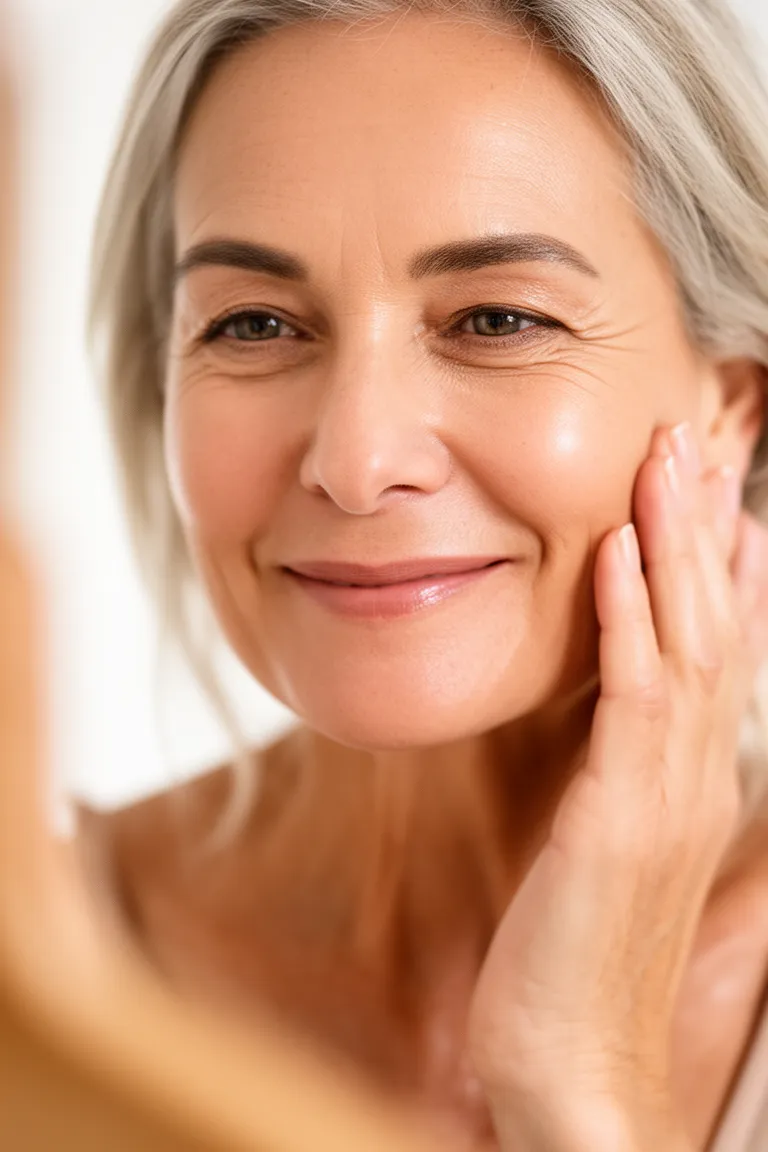
I remember standing in my bathroom, staring at my reflection with a mixture of hope and dread. I’d just applied my brand-new, highly-recommended anti-wrinkle cream for the first time. My dermatologist’s words echoed in my head: “This is the gold standard for fine lines.” I was 42, diligent with my sunscreen, faithful to my moisturizer, and ready to take this next, proactive step. I was doing everything right. So when the familiar tightness began, followed by a faint pink flush across my cheeks, I told myself what I always did: “That’s just how it works. A little irritation means it’s working.”
But a week later, the redness wasn’t a “glow.” It was persistent. The skin around my eyes felt like parchment, and applying my usual moisturizer stung. I felt a quiet sense of betrayal. I’d followed expert advice, invested in a product with stellar reviews, and yet my sensitive skin was reacting as if I’d done something wrong. This wasn’t my first rodeo. My bathroom cabinet was a graveyard of half-used tubes and jars, each one a monument to a different promise that ended in peeling, stinging, or giving up. I started to believe a painful myth: that for people like me, visible results required visible suffering. That tolerating redness was the price you paid for smoother skin.
It took a particularly bad reaction—one that left me scrambling for a calming cream instead of admiring results—to finally question this entire approach. Was I really wasting money on anti-wrinkle creams that only irritated my skin? That moment of frustration sparked a shift. I stopped chasing the strongest active and started learning how to build a routine my skin could actually tolerate. My journey wasn’t about finding a miracle product; it was about understanding why the “best” products often failed me, and what “dermatologist-recommended” truly means when you have sensitive skin.
The First Anti-Wrinkle Cream That Made Me Wonder If My Skin Was the Problem
My foray into targeted anti-aging started with a retinoid cream my dermatologist suggested. I was excited. This was serious skincare, not just a casual purchase. The first night, I applied it diligently, already imagining the smoother texture to come. By morning, my skin was tight. By day three, it was pink, flaky, and hot to the touch. I called the office, and the nurse reassured me, “A little retinization is normal. Just moisturize and push through.” So I did. I pushed through a month of discomfort, convinced the peeling was a sign of cellular turnover, of the cream doing its job.
But my skin wasn’t getting “used to it.” It was getting angrier. The fine lines I wanted to soften seemed more pronounced against the dry, irritated canvas. I felt defeated. Here I was, following a dermatologist’s recommendation to the letter, and it felt like my own skin was sabotaging me. This experience planted a seed of doubt. What burning, redness, peeling, and tightness can indicate isn’t always a “purge” or adjustment period. For sensitive skin, it can be a glaring red flag that the skin barrier—your protective shield—is being compromised. I learned the hard way that Efficacy and Tolerability of a Cream in Aging Skin. is a starting point, not a guarantee. My job was to learn how to listen to my skin’s specific language and distinguish between a minor adjustment and real damage.
How to Distinguish Expected Adjustment from Damaging Irritation
For me, the line was clear in hindsight. Expected adjustment might be a slight, fleeting tightness or a bit of flakiness in areas I was prone to dryness. Damaging irritation was a persistent, spreading redness, a burning sensation that lasted hours, and skin that felt raw and reactive to everything, even my most trusted moisturizer. If your skin feels worse, not just different, it’s likely talking to you. My dermatologist recommended anti wrinkle cream made my sensitive skin red in a way that wasn’t fading—it was a signal to stop, not persevere.
What Dermatologist-Recommended Really Means for Sensitive Skin
I had to unpack what “dermatologist-recommended” actually meant for someone whose skin threw tantrums. I realized it wasn’t a blanket seal of approval for my unique skin; it was a stamp on the ingredient’s proven efficacy. The dermatologist was recommending the science, not necessarily the specific formula sitting on my shelf. This was my lightbulb moment. An ingredient can be clinically proven to boost collagen (like retinoids) or fight free radicals (like vitamin C), but if the vehicle it’s delivered in is loaded with fragrance or harsh solvents, my sensitive skin will revolt.
I began to see the categories differently. Retinoids versus retinaldehyde, retinol alternatives, and bakuchiol became a spectrum of intensity, not a hierarchy of “best.” Prescription retinoids are the most potent, but for me, they were a sledgehammer. Gentler over-the-counter retinol or its slightly stronger cousin, retinaldehyde, could be options—but only if formulated with care. Bakuchiol, a plant-derived alternative, emerged as a fascinating gentle player that could offer similar benefits without the classic retinoid irritation. Then there were the supporting acts: Peptides, antioxidants, niacinamide, ceramides, and hyaluronic acid. Peptides send signals to your skin to do its own repair work. Antioxidants neutralize daily damage. Niacinamide calms inflammation. Ceramides and hyaluronic acid? They’re the barrier repair crew, holding moisture in and keeping irritants out. I had been shopping for a superstar quarterback, ignoring the fact that my offensive line was completely decimated.
Immediate Hydration and Plumping Versus Longer-Term Wrinkle Improvement
This distinction saved my sanity. When I finally used a product with a hefty dose of hyaluronic acid and ceramides, I saw a visible “plump” within days. My fine lines looked softer because my skin was hydrated—this was an immediate texture win. The true longer-term wrinkle improvement from collagen-building actives, however, would take months of consistent, non-irritating use. Understanding this helped me manage my expectations and appreciate the quick wins of good hydration while patiently waiting for the deeper changes.
The Ingredients I Started Avoiding After Fragrance and Strong Actives Backfired
My bathroom cabinet purge was cathartic. I took out every product that had ever made me flush and read the labels like a detective novel. The villains became clear. Fragrance, essential oils, and drying alcohols were now immediate deal-breakers. That “calming” lavender scent or “invigorating” citrus blend? Pure irritation in a bottle for skin like mine. I learned that “fragrance” on a label could hide hundreds of potential sensitizers. My new non-negotiable was seeking out fragrance free anti wrinkle cream for sensitive skin dermatologist recommended formulas.
I also developed a healthy respect for strong actives. High-strength retinol, prescription retinoids, vitamin C, and exfoliating acids weren’t inherently bad; they were just too much for my skin in its compromised state. I had to rebuild first. How the full formula affects tolerance more than one headline ingredient became my mantra. A 1% retinol serum in a bare-bones, alcohol-based formula was a hard no. A 0.3% retinol in a creamy base packed with ceramides and oat extract? That was a maybe—a cautious, patch-tested maybe.
When Eczema, Rosacea, Dermatitis, or Persistent Redness Warrants Dermatology Advice
I also acknowledged my limits. If your skin struggles involve conditions like eczema or rosacea, your tolerance for actives is fundamentally different. My journey of trial and error was for generally sensitive, reactive skin. If you have a diagnosed condition, partnering with a dermatologist to find a personalized plan isn’t a suggestion—it’s essential. They can help you navigate the minefield and potentially prescribe options formulated for ultra-sensitive skin.
My Slow-Start Routine: Patch Testing, Moisturizer Layering, and Fewer Applications
This was where my philosophy transformed into practice, and my skin finally began to trust me again. I adopted a tortoise-paced approach, and it made all the difference.
How to patch test a new anti-wrinkle cream became my sacred ritual. No more slathering it on my whole face in a fit of optimism. I’d apply a dab behind my ear for a full week, checking twice daily. No itch, no redness? Then I’d graduate to a small patch on my jawline for another few days. It felt tedious, but it prevented so many potential setbacks.
The core of my new routine was the “sandwich method.” After cleansing, I’d apply a thin layer of a simple, reparative moisturizer—my protective base. Then, a pea-sized amount of my active cream, spread between my fingertips and pressed gently into my skin, not rubbed. Finally, a second sealing layer of moisturizer. This buffer was the hero. It allowed the active to work without overwhelming my skin’s surface.
I started with laughable infrequency: once every seven nights. I’d mark it on my calendar. After two weeks of no reaction, I moved to once every five nights. I didn’t increase to twice a week until a full month of comfort had passed. I also learned to separate retinoids from acids and other potentially irritating actives. Retinol night was a quiet, gentle, hydrating night—no exfoliating acids, no scrubs, no other “active” serums. This patient, methodical approach was the antidote to my old “burn and churn” mentality.
| Approach | Best For | Realistic Timeline for Tolerance | Key Consideration |
|---|---|---|---|
| Aggressive, High-Strength Active Use | Resilient, non-sensitive skin types | 2-4 weeks of potential "retinization" | High risk of barrier damage and irritation for sensitive skin |
| Moderate-Strength with Minimal Buffering | Those with mildly reactive skin | 4-6 weeks to build daily use | Requires careful monitoring for increased sensitivity |
| Gentle Active with Heavy Buffering (The "Sandwich") | Sensitive, reactive, or barrier-compromised skin | 8-12 weeks to reach alternate-night use | Slowest but most sustainable path to results without irritation |
| Gentle Alternatives Only (e.g., Peptides, Bakuchiol) | Extremely sensitive or condition-prone skin | Immediate tolerance, results in 3+ months | A safe, effective long-term strategy that avoids classic retinoid irritation |
Finding the Right Formula: What “For Sensitive Skin” Actually Means
The hunt for the best dermatologist recommended anti wrinkle creams for sensitive skin that do not irritate taught me that marketing is not information. “For sensitive skin” on a box is meaningless without proof in the formula. I developed a checklist. First: fragrance-free and dye-free. Second: packaging that protects the ingredients—airless pumps and opaque tubes prevent actives from degrading. Third, and most important: the ingredient list itself.
I started looking for “buffer buddies.” A retinol product that also listed ceramides, niacinamide, or panthenol high on its list was designed with tolerance in mind. These ingredients would help soothe and repair as the retinol worked. I learned to appreciate shorter ingredient lists, not because they were inherently better, but because they often contained fewer potential irritants to puzzle out. My goal shifted from finding the single perfect product to building a simple, supportive routine where each step had a clear, gentle purpose. This mindset is how I finally found an anti wrinkle cream for sensitive skin that actually worked for me—it worked because my skin could tolerate it long enough to let it work.
Scientific Evidence
When I Finally Saw Progress Without the Red, Tight Feeling
The results didn’t come in a dramatic, overnight transformation. They arrived quietly, in the absence of negative sensations. The first win was simply being able to apply a product without that familiar clench in my stomach, bracing for the sting. Then, I noticed my skin looked consistently hydrated and plump in the mornings—a dewy plumping from improved barrier function that softened the appearance of finer lines immediately. My complexion had an even, calm tone without the persistent redness that had become my normal.
The longer-term changes required the patience I’d learned to cultivate. After about three months of consistent, gentle use, I saw a subtle but real improvement in the fine lines on my forehead. They weren’t erased, but they were less etched, softer, like a pencil sketch that had been gently smudged. The true victory, however, was in the texture. My skin felt smoother, more resilient to environmental changes. I wasn’t constantly reaching for makeup to cover irritation. This progress felt sustainable because it was built on comfort, not punishment. I learned to judge success not just by the mirror, but by how my skin felt throughout the day—strong, calm, and cared for.
How to Judge Comfort, Texture, and Visible Results Without Overclaiming
I set simple benchmarks. Comfort: Can I apply my entire routine without any stinging or tightness? Texture: Does my skin feel smooth to the touch, not rough or flaky? Visible Results: In side-by-side photos taken in the same light every month, can I see a slight improvement in evenness and line depth? If the answer to the first two was yes, I knew I was on the right track, even if the visual changes were incremental.
Why Your Daily SPF is Your Most Important Anti-Wrinkle Step
In my obsessive quest for the perfect night cream, I had almost taken my daytime armor for granted. My dermatologist recommended anti wrinkle cream efforts would have been completely futile without it. I already used SPF daily, but understanding the “why” deepened my commitment from habit to non-negotiable priority. Sun exposure is the single largest contributor to premature aging—it breaks down collagen and causes photoaging. Using a retinoid or antioxidant cream to repair and build collagen at night, only to let UV rays degrade it all day, is a exhausting, pointless cycle.
I made sure my morning sunscreen was broad-spectrum, SPF 30 or higher, and formulated for sensitive skin. Mineral options with zinc oxide often became my go-to, as they tend to be less irritating. This wasn’t just a separate step; it was the protective shield that allowed all my other products to do their job effectively. It was the ultimate act of making my nighttime investment worthwhile. Does anti wrinkle cream help if I already use sunscreen every day? The answer is a resounding yes—they are the perfect, synergistic partnership. Sunscreen is the ultimate prevention; anti-wrinkle creams are the thoughtful repair.
Trusting the Process Over the Promise
My journey taught me that managing expectations is part of the deal. Anti-wrinkle creams are not erasers; they are supporters. They help improve texture, support collagen, and combat past damage, but they work on a timeline of months, not days. For someone with sensitive skin, the process is necessarily slower. The goal isn’t to tolerate irritation, but to avoid it altogether while making incremental, lasting gains.
I now see my skincare routine as a long-term partnership with my skin, not a series of aggressive interventions. I listen to it, respect its limits, and celebrate the quiet victories of comfort and consistency. The frustration of those early failures was real, but it led me to a smarter, kinder, and ultimately more effective approach. If your dermatologist recommended anti wrinkle cream made your sensitive skin red, it doesn’t mean you’re doomed or that your skin is broken. It might just mean you need a different map—one that prioritizes the health of your skin barrier on the winding road to results.
Frequently Asked Questions

Q: How long does it take to see real results from an anti-wrinkle cream on sensitive skin? A: You’ll likely notice improvements in hydration and overall skin texture (a plumper, smoother feel) within a few weeks if your skin is tolerating the product well. However, visible improvement in established fine lines and wrinkles from ingredients like retinol typically requires consistent, gentle use for at least three to six months. For sensitive skin, going slow to avoid irritation is crucial, so patience isn’t just a virtue—it’s the strategy.
Q: I already use sunscreen every day. Do I really need an anti-wrinkle cream too? A: Absolutely. Think of them as a powerful team. Daily broad-spectrum sunscreen is your essential defense—it prevents the vast majority of visible aging caused by UV rays. An anti-wrinkle cream (used in the evening) is your offense—it works to repair existing damage, boost collagen production, and improve skin texture from past sun exposure and natural aging. Sunscreen stops new damage, while active creams help fix the old.
Q: What should I look for when choosing an anti-wrinkle cream for sensitive skin? A: Prioritize the formula over a single strong active. Look for fragrance-free, dye-free products. Seek out formulas that combine the active (like a gentle retinol or peptide) with barrier-supporting ingredients such as ceramides, niacinamide, or hyaluronic acid. Opt for packaging that protects the ingredients (airless pumps, opaque tubes). And always, always patch test first on a small area for at least a week.
Q: Is the initial stinging or redness normal, or should I stop immediately? A: A mild, temporary tingling might occur with some actives, but persistent stinging, burning, significant redness, peeling, or itching is not “normal” and is a clear sign of irritation. For sensitive skin, you should stop using the product, focus on barrier repair with a simple, soothing moisturizer, and once healed, consider reintroducing it much more slowly (like once a week with the sandwich method) or trying a gentler formula altogether.
Q: Are there good gentle retinol alternatives for sensitive skin and fine lines? A: Yes, and they can be excellent long-term options. Bakuchiol is a plant-derived ingredient that studies show can offer similar benefits to retinol in improving fine lines and elasticity with far less irritation. Peptides are another fantastic, gentle alternative that signal the skin to produce more collagen. These can be great starting points or permanent solutions for those who cannot tolerate traditional retinoids, even in gentle formulas.
Q: How do I know if I’m wasting money on anti-wrinkle creams that irritate my skin? A: You’re likely wasting money if you’re repeatedly purchasing products that cause persistent negative reactions (redness, burning, peeling) that force you to stop using them, or if you’re constantly buying new “gentle” options without a clear plan for slow introduction. Investing in one well-formulated product and a good moisturizer, then committing to a patient, slow-start routine for 3-4 months, is a far better use of your resources than hopping from one irritating product to the next.
📌 Love this guide? Save it on Pinterest!
Pin Sensitive Skin Anti-Wrinkle Cream Journey: Results Without Irritation 2026 to your board so you can come back to it later.

