
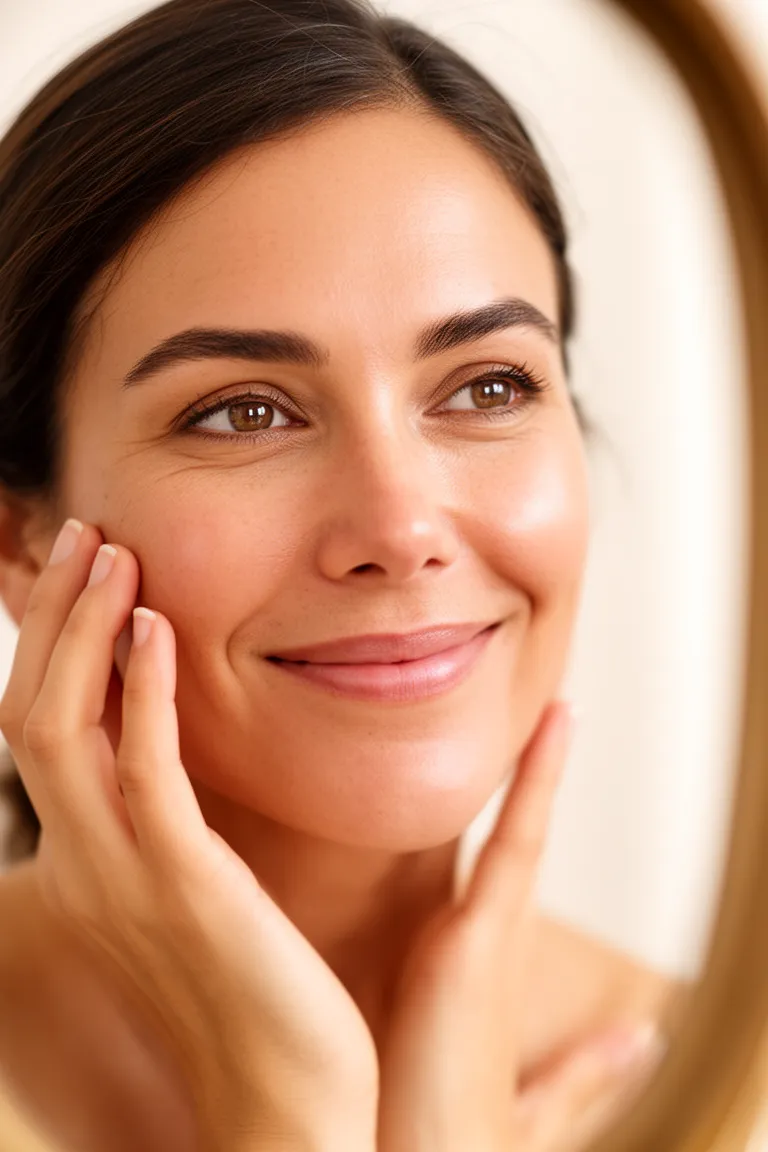
I was standing in front of my bathroom mirror, fresh from a morning run and a shower, and I pulled gently at the skin on my cheek. It didn’t snap back. It just… lingered. I did it again, a little panicked. The bounce was gone. This wasn’t about a few fine lines or some dryness; this was a fundamental change in the material of me. I was 46, and for the first time, my skin felt less like resilient fabric and more like well-worn silk that had lost its tension.
The frustration was profound because, by all accounts, I was doing everything "right." My lunches were colorful salads, I lifted weights and did yoga, and my daily sunscreen ritual was non-negotiable. I’d earned my glow, I thought. So why did my skin feel thinner, looser, like it was quietly resigning from its job? I slathered on more moisturizer and bought every firming cream with promising before-and-after photos. They’d leave my skin feeling plumper for a few hours, but by afternoon, that subtle sag, that loss of elasticity, was staring back at me. I felt betrayed by my own healthy habits and skeptical of every jar that promised a miracle.
That moment of pulling my skin was my turning point. I realized I was treating a structural problem with a surface-level solution. Restoring skin elasticity after 40, I would learn, isn't about finding one magical product. It's a different game entirely—one focused on consistent, evidence-informed support for the skin's deep-down architecture. This is my story of moving from frustration to understanding, and what finally, realistically, changed the look and feel of my skin.
The Morning I Realized My Skin Had Lost Its Bounce
It wasn't a wrinkle that scared me. It was the lack of resistance. I’d leaned in to apply concealer and noticed the skin under my eye just seemed to… drape. It didn't feel sudden because of one day, but the realization was. I think that's how it happens in your 40s. The changes accumulate silently until one morning, the light hits you just so, or you make a certain expression, and you see a version of your face that’s unfamiliar. For me, it was the loss of that youthful rebound, the "bounce" I’d taken for granted. My skin looked tired even when I wasn't.
Why elasticity changes can feel sudden in your 40s
It’s like a slow leak in a tire. You might not notice the gradual loss of pressure day-to-day, but one morning you get in the car and it just feels… flat. Our bodies produce less collagen and elastin—the protein fibers that act like scaffolding and rubber bands in our skin—starting in our mid-20s. By our 40s, that decline accelerates, especially for women as estrogen begins to fluctuate. The cumulative effect of decades of small breakdowns, paired with this natural slowdown in production, can reach a tipping point. That’s why my skin lost its bounce after 40 despite wearing sunscreen—the daily protection was vital, but it couldn’t undo the slow, silent withdrawal from my collagen savings account that had been happening for years.
Firmness, laxity, dehydration, and volume loss are different concerns
This was my first crucial lesson. I used to lump everything under “aging skin.” But when I started paying attention, I saw they were separate players. Dehydration made my skin look crepey and papery, but a good moisturizer smoothed that out. Volume loss (like less fat in my cheeks) changed the shape of my face. But laxity—the loss of elasticity—was the specific villain. It was the reason my skin didn’t spring back after a smile, why it felt less taut to the touch. Understanding this helped me stop wasting effort. I wasn’t just dry; my skin’s infrastructure was weakening.
When sudden or uneven changes warrant medical assessment
While my journey was about gradual, natural changes, it’s important to listen to your skin’s signals. If you notice sudden sagging, especially if it’s more pronounced on one side of your face, or if your skin feels unusually fragile and bruises easily, it’s worth a conversation with a dermatologist. It can sometimes point to other factors like certain medications, rapid weight changes, or underlying health conditions. For me, it was the symmetrical, gentle letdown of time, but checking in gave me peace of mind to focus on my routine.
Why Healthy Habits Did Not Fully Restore My Skin Elasticity After 40
This was the hardest pill to swallow. I felt like I had a good defense: SPF was my armor, nutrition was my fuel, exercise my pump. How could I still be losing? The answer was in two relentless forces: intrinsic aging and a lifetime of cumulative sun exposure. Yes, my daily SPF was protecting me now, but it couldn't erase the sunburns of my teens or the years of incidental exposure walking to the car, sitting by a window, or those “just this once” days without protection. That UV damage quietly degrades collagen and elastin fibers over decades, like rust weakening a bridge from the inside out.
Intrinsic aging and cumulative ultraviolet exposure
My good habits were absolutely reducing further risk and supporting overall skin health—they weren't wasted effort. But they couldn't magically replace the collagen and elastin that my body was naturally producing less of after 40. Think of it like a savings account. For years, I’d been making small withdrawals (sun, stress, natural aging) and my body made steady deposits (collagen production). Now, in my 40s, the deposit rate had slowed dramatically, but the withdrawals hadn't. My healthy lifestyle was like cutting back on unnecessary spending—it was smart and essential—but it wasn't a massive cash infusion. I needed to find ways to actively support new deposits.
Why exercise, sleep, nutrition, and SPF reduce risk but cannot replace lost collagen
My colorful salads and weight training support my body’s overall health and circulation, which is fantastic for a healthy glow. But they don’t directly instruct my fibroblasts (the collagen-producing cells in my skin) to work overtime. Sunscreen is the ultimate shield, preventing new damage. But it’s preventative, not restorative. This mismatch is the core of the frustration for so many of us who live healthfully. We’re doing the right things for long-term wellness, but restoring skin elasticity after 40 requires a different, more targeted strategy alongside that foundation.
Menopause, estrogen changes, and other factors
Add to this the hormonal shifts of perimenopause, which for me started in my mid-40s, and the puzzle pieces clicked. Declining estrogen directly impacts skin thickness, hydration, and collagen production. It’s why my skin could feel dry even when I was drinking water and using moisturizer, and why the loss of firmness seemed to accelerate. It explained why my skin felt different now than it did at 35, despite similar habits. This wasn’t a personal failure; it was a biological shift that required a tactical adjustment.
The Research That Changed Everything: Hydration vs. Structure
After my disappointment with firming creams, I went down a rabbit hole of dermatology studies and cosmetic chemistry. The breakthrough came when I understood that hydration and collagen support are not the same thing. Those creams I loved? Many were brilliant at humectant hydration—pulling water into the outer layer to plump it up temporarily. It felt great, but it was like blowing air into a slightly deflated balloon. The structure of the balloon itself (my collagen and elastin) wasn't being repaired.
This explained why my skin looked better in the morning after a heavy moisturizer but seemed to "deflate" by evening. I was treating a symptom (dehydrated surface) but not the cause (weakened infrastructure). To truly work on how to improve skin elasticity after 40 when moisturizer is not enough, I had to target the deeper dermal layer where collagen lives. This meant shifting my budget and attention from quick-plump products to ingredients with solid, if gradual, evidence for supporting skin structure. It was the difference between renting and owning—between a temporary fix and a long-term investment.
are dermatologist recommended anti wrinkle creams actually worth the money
The Routine I Built After Firming Creams Disappointed Me
I stripped my routine back to basics and rebuilt it with intention. My new mantra was: Protect, Support, Nourish. This wasn’t about adding ten new steps; it was about strategic swaps and consistent priorities.
Barrier hydration: humectants, ceramides, and moisturizers
I didn’t abandon moisturizer—I upgraded its role. Instead of just seeking the thickest cream, I looked for formulas with smart ingredients: hyaluronic acid to pull in water, and ceramides and cholesterol to reinforce my skin’s natural barrier. Think of your skin barrier as the roof of your house. If it’s leaky and damaged (from over-cleansing, irritation, or just age), no matter how much you heat the inside (with actives), you’ll lose the benefit. A strong barrier locks in hydration and creates a stable environment for actives to work. This step alone made my skin feel more comfortable and resilient, which was a game-changer for tolerating what came next.
Retinoids: gradual introduction, irritation control, and realistic evidence
This was my cornerstone. The evidence for retinoids (like retinol) in stimulating collagen is some of the strongest we have. But I’d been scared of them—tales of redness and peeling. So I started slower than slow. Twice a week at night, I used the “sandwich method”: a layer of my barrier-repair moisturizer, a pea-sized amount of a gentle retinoid, then another layer of moisturizer. This buffered the effect. Yes, I still had some flaking days, but by listening to my skin and pulling back when needed, I built tolerance. Within a month, I could use it three times a week. Does retinol help restore skin elasticity after 40? In my experience, yes—but it’s a marathon, not a sprint. It became my most trusted tool for deep-down support.
Peptides, vitamin C, and antioxidants
I added a peptide serum in the morning. Peptides are short chains of amino acids that act like little messengers, potentially signaling to the skin to produce more collagen. Are peptides worth it for loose skin after 40 or am I wasting money? I don’t see them as a magic bullet, but as a supportive teammate. They’re generally gentle and hydrating, and I believe they contribute to the overall “team effort.” I also added a vitamin C serum in the AM before sunscreen. Its main job is as a powerful antioxidant, neutralizing free radicals from pollution and UV exposure that would otherwise break down collagen. It’s like having a security guard protecting the construction site (where my retinoid is working at night).
Broad-spectrum sunscreen: the non-negotiable
My SPF 30+ broad-spectrum sunscreen became sacred. I stopped seeing it as just a “beauty” step and more as essential maintenance—the single most important step to prevent further collagen breakdown. Without it, everything else I was doing was like building a sandcastle against the tide. I apply it liberally every single morning, no exceptions. If I’m outside a lot, I reapply. This habit supports every other investment I’m making in my skin.
| Approach | Primary Focus | Realistic Timeline for Visible Change | Key Consideration |
|---|---|---|---|
| Barrier-Focused Hydration | Improving immediate texture, reducing crepiness, calming sensitivity | 2–4 weeks | Essential foundation, but doesn't address deeper laxity alone. |
| Hydration + One Active (e.g., Retinoid OR Peptides) | Beginning structural support, improving firmness and fine lines | 3–6 months | Requires patience and consistency; best for starting a targeted routine. |
| Comprehensive Support (Protect, Support, Nourish) | Holistic improvement in elasticity, brightness, and overall skin health | 6–12 months | Sustainable long-term strategy; manages expectations for gradual vs. instant results. |
| Professional In-Office Treatments | Addressing more pronounced laxity that topicals can't reach | Varies (weeks to months post-procedure) | Complements home care; involves cost, downtime, and professional consultation. |
What Changed First—and What Still Took Time
Managing expectations was crucial. If I expected a facelift from a cream, I’d quit in frustration. So I paid close attention to the timeline of my experience restoring skin elasticity after 40.
The first thing I noticed, within a few weeks, was dramatically improved hydration and texture. My skin felt smoother, looked more radiant, and that crepey, papery appearance from dehydration vanished. It was a fantastic confidence boost, but I knew it wasn’t the elasticity fix. It was my roof getting repaired—necessary, but not the whole renovation.
The real, deeper changes came slowly, over months. Around the four-month mark of consistent retinoid use, I noticed my skin just looked… denser. Firmer to the touch. The fine lines around my eyes were softer, less etched. The subtle sag along my jawline seemed a bit more lifted—not dramatically, but when I compared photos, there was a definite improvement in resilience. My skin felt stronger, like it had more “stuff” underneath it.
I had to accept that creams cannot produce a surgical lift. They can improve the quality, thickness, and elasticity of the skin you have, but they cannot reposition deep tissue or remove significant excess skin. Learning this actually freed me. It helped me see my routine as successful maintenance and improvement, not a failure for not achieving the impossible. It answered my silent question: can sunscreen and retinol really improve sagging skin after 40? They can improve its quality and support its structure, which translates to a firmer, more lifted appearance—but within the natural bounds of what topical care can do.
I do everything right but my skin still looks dull
Scientific Evidence
How I Made the Routine Work on Busy, Irritated-Skin Days
A 10-step routine was never going to last for me. I’m a busy woman, and my skin has sensitive days. I needed a sustainable system, not a punishing regimen. So I created rules for reality.
A two-step minimum routine for mornings and evenings
On perfect days, I do my full routine: cleanse, vitamin C, peptide, moisturizer, SPF (AM) or cleanse, retinoid, moisturizer (PM). On crazy or irritated-skin days, my minimum is non-negotiable: 1) Cleanse gently, 2) Moisturize with SPF (AM) or a rich barrier-repair cream (PM). Consistency with the basics is better than perfection followed by burnout. Some days, just keeping my barrier healthy is the win.
How to introduce one active at a time
When I rebuilt my routine, I didn’t throw everything at my face at once. I started with the retinoid, and used only that new active for a full month. Once my skin was comfortable, I added vitamin C. Another month later, I added peptides. This let me monitor for irritation and actually know what was working (or causing a problem). It’s the best advice for anyone wondering why isn't my anti-aging skincare working after 40—it might be because you’re overwhelming your skin, and it can’t tell you what’s helping and what’s hurting.
Pregnancy, breastfeeding, eczema, rosacea, and sensitive-skin precautions
While my journey wasn’t through pregnancy, I know many women in their 40s are. Retinoids are a hard no during pregnancy and breastfeeding. For those with conditions like eczema or rosacea, the approach needs extra care. The “sandwich method” and focusing first on barrier repair for a full month before even thinking about an active is crucial. Peptides and gentle antioxidants can be a great starting point. When your skin is inflamed, the goal is to calm, not stimulate. This is where listening to your skin—and a good dermatologist—is worth more than any product.
When to stop, simplify, or consult a dermatologist
I learned to recognize my skin’s “no” signals: stinging, persistent redness, burning, or unusual dryness. When that happened, I’d pause all actives for 2 3 days and go back to my gentle cleanser and barrier cream. If it didn’t calm down, I knew it was time to simplify further or get professional advice. There’s no trophy for pushing through pain. This mindset shift—from “I must do the routine” to “I must care for my skin”—was everything.
The Mindset Shift That Was Just As Important
Perhaps the biggest change wasn’t in my medicine cabinet, but in my head. I stopped searching for a product to make my 46-year-old skin look 26. That quest had only led to disappointment and wasted money. Instead, I started focusing on making my skin the healthiest, most resilient version of itself at 46.
I began to see the lines not just as aging, but as evidence of a life lived—laughter, concern, sunshine, thought. My goal shifted from “restoration” to “optimization.” This took the panic out of the process. My skincare routine became a form of respectful maintenance, like tending a garden. I was nurturing what I had, protecting it, and helping it thrive in its current season. This made the routine sustainable, even enjoyable. It was no longer a battle against my face, but a partnership with it.
When to Consider Professional Help
After a year of diligent home care, I had a consultation with a dermatologist. I wanted to understand what in-office options could complement my routine for concerns that topicals couldn’t address, like more pronounced laxity in specific areas. We discussed treatments like radiofrequency microneedling or laser therapies, which can heat the deeper dermal layers to stimulate a more robust, focused collagen response. Functional integrity of aging skin, from cutaneous biology to anti-aging...
It was empowering to go into that conversation educated. I viewed these not as admissions of failure with my home routine, but as potential power-ups—specialized tools for specific jobs. I felt no pressure to choose one immediately. It’s now a tool in my back pocket, a possibility for the future. This holistic view—home care as daily foundation, professional treatments as occasional renovations—finally gave me a complete and realistic picture of the best routine for skin elasticity after 40.
skinception review before and after
Frequently Asked Questions
Q: How long does it take to see real improvement in skin elasticity with a new routine? A: You'll likely see better hydration and texture—that plumper, smoother feel—within 2-6 weeks. But for tangible improvements in firmness and elasticity, that deeper structural change, you need to think in terms of 3 to 6 months of absolutely consistent use, especially with ingredients like retinoids. Collagen turnover is a slow process, so patience is non-negotiable. I didn’t see the real “bounce” improvement until I’d passed the four-month mark.
Q: I have sensitive skin. Can I still use retinoids or peptides? A: Absolutely, but with extreme caution and strategy. Start with the lowest concentration retinoid you can find, and use the "sandwich method" (moisturizer, retinoid, moisturizer) once a week. Peptides are generally very well-tolerated and are a fantastic, gentle alternative or complement to start with. Always, always introduce one new product at a time and patch test behind your ear or on your jawline for a few days.
Q: Are oral collagen supplements worth it for loose skin after 40, or am I wasting money? A: The science is promising but still evolving. Some studies suggest high-quality hydrolyzed collagen peptides can improve skin hydration, elasticity, and collagen density by providing building blocks. Think of them as a potential support for your internal supply, not a standalone solution. If you try them, look for hydrolyzed collagen (Types I & III are key for skin), commit for at least 3 months to assess, and manage expectations—they’re a supplement to a good routine, not a replacement for it.
Q: Why isn't my anti-aging skincare working after 40? A: The most common reasons are inconsistency, using the wrong ingredients for your concern (like only hydrating when you need collagen support), or not using adequate sun protection, which undermines everything else. It’s also possible your skin’s needs have changed; what worked at 35 might not be enough at 45. Re-evaluate: Does your routine include proven actives (like a retinoid)? Are you giving them enough time (3+ months)? Are you protecting your skin daily with SPF?
Q: How do I choose between all the anti-aging ingredients? I’m overwhelmed. A: Don’t try to use them all at once. Prioritize based on evidence and your primary concern. For overall collagen support and texture, a retinoid is the gold-standard workhorse. Start there. Build a routine around supporting and protecting your skin while using it (gentle cleanser, barrier moisturizer, SPF). Only consider adding another active (like vitamin C or peptides) once you’ve used the first one consistently and comfortably for a few months. Master one pillar at a time.
📌 Love this guide? Save it on Pinterest!
Pin Restore Skin Elasticity After 40: My Real Routine for Bounce in 2026 to your board so you can come back to it later.

