
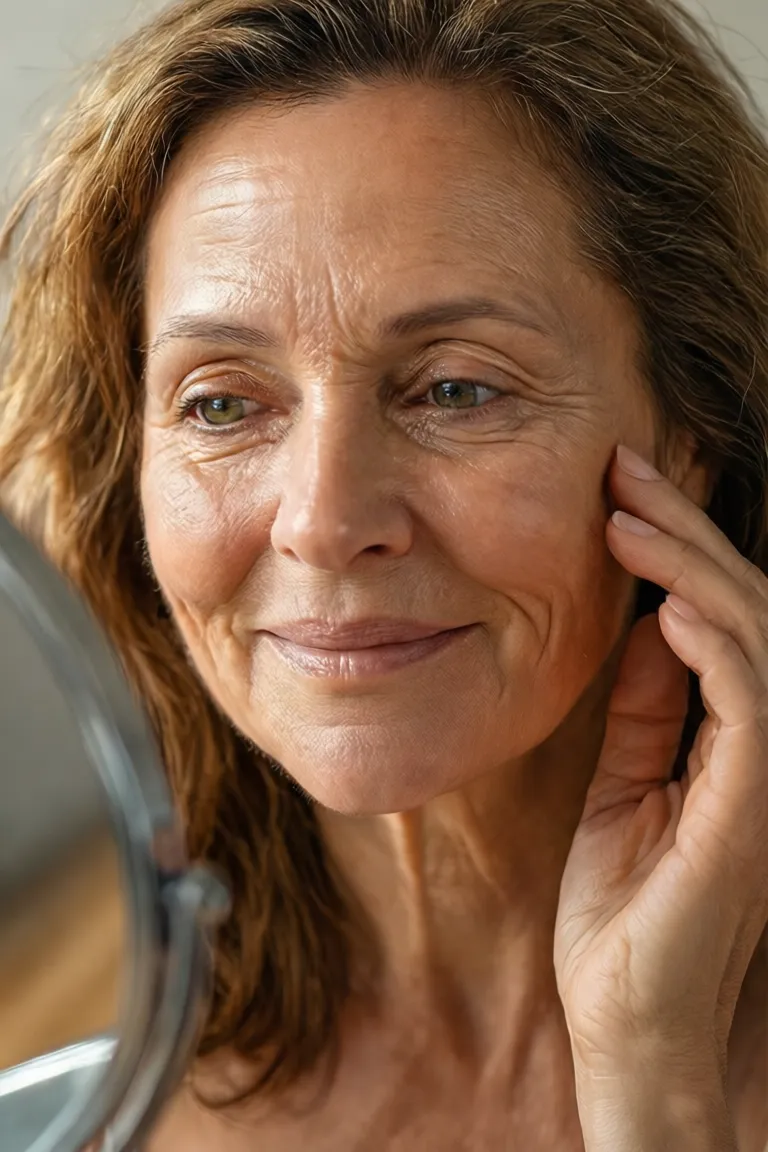
I prided myself on doing everything right. At 47, I exercised five days a week, ate a rainbow of vegetables, drank water like it was my job, and had been a religious sunscreen wearer since my twenties. My vanity shelf was a carefully curated library of serums, creams, and potions, each promising to support my skin. So, when I first noticed the subtle shift—a softness along my jawline that wasn’t there before, a slower bounce-back when I pressed my cheek—I was confused. It felt deeply unfair. I had followed all the rules, yet my skin was quietly changing its own.
The frustration grew as I doubled down. I bought richer, more expensive firming creams, added collagen powders to my morning smoothie, and layered on peptides and retinoids with meticulous dedication. Months passed. My skin was hydrated, yes, but that underlying feeling of resilience, that youthful elasticity, seemed to be fading despite my arsenal of products. I’d catch my reflection in a certain light and see not fine lines, but a gentle loosening that no amount of cream seemed to address. I felt like I was speaking a language my skin no longer understood. This was my experience improving skin elasticity after 40, and it was a humbling lesson in listening rather than just doing.
It was this very frustration—the gap between my considerable effort and the visible, tangible results I craved—that finally forced me to step back. I realized I wasn’t just battling my reflection; I was battling misinformation and my own unrealistic expectations. The journey to understand what my skin actually needed, not what the beauty industry told me to buy, changed everything. It wasn’t about finding a miracle in a jar, but about rebuilding a foundation of patience and science.
The Moment I Realized My Skin Elasticity Was Changing After 40
The realization didn’t hit me all at once. It was a series of small, quiet observations that eventually formed a clear, undeniable picture. It was noticing that the delicate skin around my eyes took longer to smooth out after I smiled. It was the way my foundation settled differently, not into lines, but into a texture that seemed less taut. I remember one morning, after a full eight hours of sleep, pressing my fingertip gently against my cheek. In my thirties, the skin would snap back instantly. Now, it did so, but just a fraction slower. That was the moment. It wasn’t about wrinkles; it was about tempo. My skin’s rhythm was changing.
I learned that this slowdown is the most natural thing in the world. Starting in our mid-twenties, we lose about 1% of our collagen each year, and the elastin fibers that give skin its snap begin to fray. By 40, this process is often accelerated by a perfect storm: cumulative sun exposure (even with sunscreen, no one is perfect), shifting hormones, and plain old genetics. My healthy lifestyle was absolutely helping, but it couldn’t halt these fundamental biological shifts. I had to accept that I wasn’t fixing a problem caused by neglect; I was navigating a natural transition. Understanding this was my first step toward a kinder, more effective approach.
What Normal Age-Related Change Feels Like
For me, it wasn't a sudden sag. It was a loss of that underlying "scaffolding." Think of a perfectly made bed with a firm mattress. Over time, the mattress softens. You can still smooth the sheets (that's your moisturizer), but the foundational support isn't as robust. That's what was happening. My skin felt more like a delicate silk than resilient cotton. This is what I wish someone had told me: why is my skin losing elasticity after 40 despite using sunscreen? Because sunscreen is a shield, not a time machine. It protects what's left from new damage, but it doesn't erase the decades of sunlight, gravity, and cellular changes that have already occurred.
Why My Expensive Firming Creams Could Not Do What I Expected
Armed with concern, I did what many of us do: I went shopping. I bought creams with bold claims about “lifting” and “restructuring.” I slathered on rich moisturizers that promised to restore firmness. And for a few glorious hours each morning, my skin did look plumper, smoother, more radiant. But by afternoon, that lifted feeling would fade, and the underlying laxity remained. I was treating the symptom (dehydration) but not the cause (structural loss). I finally had to confront the hard truth: no topical cream can mechanically lift skin that has lost its structural support. They can hydrate, they can temporarily plump, they can improve texture and tone, but they cannot re-drape skin.
This was my biggest aha moment. I was asking my moisturizers to perform architectural work they were never designed for. When I looked at my routine with this new lens, I saw a collection of excellent hydrators and surface-level improvers, but a glaring absence of ingredients that could communicate with my skin at a deeper, cellular level to support its own repair processes. I was piling on product, but missing strategy.
The Difference Between Plumping and True Lifting
Here’s the analogy that clicked for me. Imagine your skin is a balloon. A good hydrator adds more air, making the balloon taut and full—that’s the temporary plump. But if the rubber of the balloon itself (your collagen and elastin) has thinned and weakened, no amount of air will prevent it from eventually sagging. My expensive firming creams were just better air pumps. They weren't repairing the rubber. This understanding forced me to ask a new, more honest question: are firming creams worth it for skin elasticity after 40? The answer, for me, was: only if you see them as luxurious hydrators, not structural solutions. They have a place, but it’s a supporting role.
The Turning Point: Letting Go of the Miracle-Cure Mentality
My breakthrough came not from adding another product, but from deleting my shopping apps and sitting with my disappointment. I was exhausted from chasing overnight results that never came. I realized I had been measuring progress in the wrong way—looking for a lifted jawline in the mirror every single day, which was like expecting to see a tree grow by staring at it. I gave myself permission to stop. I stopped scrolling through flawless filtered faces, stopped reading hyperbolic product reviews, and started researching the actual biology of skin aging.
I began to see my skin not as a foe to be battled, but as an organ that was doing its best under changing circumstances. It needed support, not a barrage of conflicting signals. This mental shift was more powerful than any serum. It allowed me to build a routine from a place of nourishment and patience, not panic and urgency. I started to ask a new question: “What does my skin barrier need to be healthy and resilient?” instead of “What product will make this sagging disappear?” This was the pivot from being a consumer to being a caretaker.
The Routine I Built Around SPF, Barrier Care, and Gradual Retinoid Use
I stripped my routine back to basics with a new, singular focus: consistency over complexity. My goal was no longer to attack aging, but to cultivate the healthiest possible environment for my skin to function. This became the best realistic routine to restore skin elasticity after 40 that I could personally sustain.
My Non-Negotiable Morning: Protection First
My morning routine became sacred and simple. A gentle, creamy cleanser (or just water if my skin felt fine), a hydrating serum with antioxidants like vitamin C, a rich moisturizer, and—the most important step—a generous, pea-sized amount of broad-spectrum SPF 50 mineral sunscreen for my face and neck. I learned that sunscreen isn’t just about preventing burns; it’s the single most effective way to shield the precious collagen and elastin I still have from further breakdown. This daily act of protection became my most powerful firming treatment. I stopped thinking of it as the last step and started thinking of it as the main event.
My Evening Ritual: Repair and Communication
Nights were for repair. After a double cleanse to thoroughly remove sunscreen and the day’s grime (a step I’d often skipped before!), I focused on barrier support with a simple, ceramide-rich moisturizer. Then, three nights a week, I applied the star of the show: a prescription retinoid. But this time, I used it with respect. A true pea-sized amount for my whole face, buffered over my moisturizer on dry skin, with zero other actives on those nights. I endured the initial dryness and flaking without quitting, because I finally understood this was the one topical ingredient with decades of evidence showing it could actually encourage collagen production and improve skin texture over time. It wasn’t a quick fix; it was a long-term investment in my skin’s infrastructure. This simple, consistent system was what finally moved the needle for me when I tried everything to restore skin elasticity after 40 and nothing else had.
| Approach | Realistic Goal | What It Can Improve | Mindset Required |
|---|---|---|---|
| Hydration & SPF Focus | Prevent further damage, maintain plumpness | Skin texture, glow, barrier health | Patience; this is a lifelong foundation |
| Hydration + Consistent Retinoid | Stimulate collagen, improve firmness & texture | Fine lines, skin thickness, elasticity over time | Commitment to 6+ months of consistent use |
| Topicals + Internal Support (Diet/Supplements) | Support skin quality from inside & out | Overall skin health, hydration, possible density | Holistic view; managing expectations on supplements |
| Topicals + Professional Procedures | Address established laxity that topicals can't | Significant lifting, tightening, contour | Understanding topicals as prep & maintenance, not replacement |
What Collagen, Hydration, Diet, and Exercise Could—and Could Not—Change
With my topical routine solidified, I took a hard look at my internal habits. Was I wasting my money and smoothie space on collagen powder? The science, I discovered, is nuanced and often oversold. While the body doesn’t directly shuttle ingested collagen to your face, some promising studies suggest specific collagen peptides may act as messengers, signaling your skin’s fibroblasts to get to work. Effects of hydrolyzed collagen supplementation on skin aging: a systematic review... I kept it in my routine, but as a “might help, can’t hurt” supplement, not a magic bullet. When someone asks me does collagen help restore skin elasticity after 40, my answer is: it may provide subtle support for skin density and hydration, but don’t expect it to single-handedly reverse sagging.
Hydration, however, was non-negotiable. Well-hydrated skin simply looks plumper and healthier, which can minimize the appearance of laxity. My water intake and topical hyaluronic acid became foundational. But I also learned that overloading on humectants without a good moisturizer to seal them in could backfire, leaving my skin paradoxically drier. It was about balance.
My healthy diet and regular exercise, I learned, were my silent heroes. They couldn’t mechanically tighten loose skin, but they were doing profound work behind the scenes. The protein from my meals provided amino acids for all bodily repair, including skin. The antioxidants in my berries and leafy greens fought free radicals. My cardio workouts promoted circulation, delivering oxygen and nutrients to my skin. They were supporting my skin’s quality—its glow, its clarity, its overall health—which is just as important as its firmness. This holistic view helped me appreciate my efforts instead of resenting them for not delivering the impossible.
Scientific Evidence
When I Stopped Chasing Overnight Results and Measured Progress Differently
The final, and perhaps most liberating, part of my journey was redefining success. I put away the magnifying mirror and stopped the daily scrutiny. Instead, I started tracking progress on a quarterly basis. I took a bare-faced photo in consistent, natural light every three months. My metrics changed entirely.
I wasn’t looking for a lifted jawline (though I hoped for subtle improvement). I was looking for improved hydration (less tightness, more glow), smoother texture, diminished fine lines, and an overall look of health. I celebrated the fact that my skin was no longer irritated, that it felt supple and comfortable all day. I noticed that the fine lines around my eyes seemed softer, and my skin had a more even tone. These were real wins. This shift in measurement answered the anxious question I’d had for months: how long does it take to improve skin elasticity after 40? For texture and hydration, 4-8 weeks. For genuine firmness from actives like retinoids, you need to think in 6-month cycles. The skin renews itself much slower now.
I also accepted that for established laxity, consistent topical care might only get me so far. And that was okay. It set a realistic foundation. I now view professional treatments—like laser therapies or micro-focused ultrasound—not as admissions of defeat, but as potential tools in a broader toolkit, for down the road. My daily routine is the foundation that keeps my skin healthy and maximizes the results of anything else I might choose to do. Letting go of the fantasy of total reversal allowed me to see and appreciate the genuine improvements I was making.
The Empowerment of Understanding Your Own Skin
Today, my relationship with my skin is peaceful. I don’t have the skin of my 30-year-old self, and I’ve made peace with that. What I have is skin that is deeply cared for, healthy, resilient, and glowing with vitality. The journey to restore skin elasticity after 40 taught me that the real power lies in knowledge and consistency, not in the next expensive launch. It’s about combining relentless sun protection, unwavering barrier support, and the careful, patient use of proven actives.
My story is for every woman who looks in the mirror after 40 and feels that quiet confusion, wondering how to restore skin elasticity after 40 when creams are not working. I see you. The path forward isn’t about trying harder with more products; it’s about understanding better and focusing on what truly matters. It’s a marathon, not a sprint, and the finish line isn’t perfection—it’s acceptance, health, and the confidence that comes from knowing you’re giving your skin exactly what it needs.
Frequently Asked Questions

Q: How long does it really take to see improvements in skin elasticity with a new routine?
A: This was my hardest lesson! You must think in months, not weeks. For hydration and texture, you might see changes in 4 6 weeks. For true improvements in firmness and elasticity from ingredients like retinoids, you need to commit to at least 3 6 months of absolutely consistent use. The skin’s renewal cycle slows as we age, so patience isn’t just a virtue; it’s a requirement. I didn't see a meaningful difference in resilience until I hit the five-month mark with my simplified routine.
Q: I use sunscreen every day. Why is my skin still losing elasticity after 40 despite using sunscreen?
A: First, give yourself credit—you’re doing the most important thing! However, we are often too gentle with application. The recommended amount for face and neck is about a teaspoon (two finger-lengths), and we need to reapply every two hours if we're in direct sun. We also miss areas like the sides of the neck, décolletage, and hands. Most importantly, sunscreen protects against further damage but doesn't reverse the cumulative photoaging from the first 40+ years of your life. It's a shield for the future, not a repair for the past.
Q: Are collagen supplements or firming creams worth it for skin elasticity after 40?
A: It depends entirely on your expectations. Topical firming creams are excellent hydrators and can temporarily plump the skin, making it look smoother for a few hours, but they cannot significantly rebuild lost structure. View them as supportive players for appearance. For collagen supplements, look for hydrolyzed collagen peptides from a reputable source. The evidence suggests they may support skin hydration and density for some people, but results are subtle and vary. Think of them as a potential internal support, not a standalone solution for sagging.
Q: I’m overwhelmed. What is the one thing I should start doing today to help my skin?
A: If you do nothing else, be militant about your broad-spectrum SPF 30 (or higher) sunscreen. Apply the proper amount every single morning, rain or shine, to your face, neck, and chest. It is the single most effective way to prevent further breakdown of collagen and elastin. This one habit does more to preserve your skin’s future elasticity than any cream promising to restore it. After that, focus on finding a gentle moisturizer you’ll use consistently to support your skin barrier. Everything else builds from that foundation.
📌 Love this guide? Save it on Pinterest!
Pin Restore Skin Elasticity After 40: My Honest Journey & What Actually Works 2026 to your board so you can come back to it later.

