
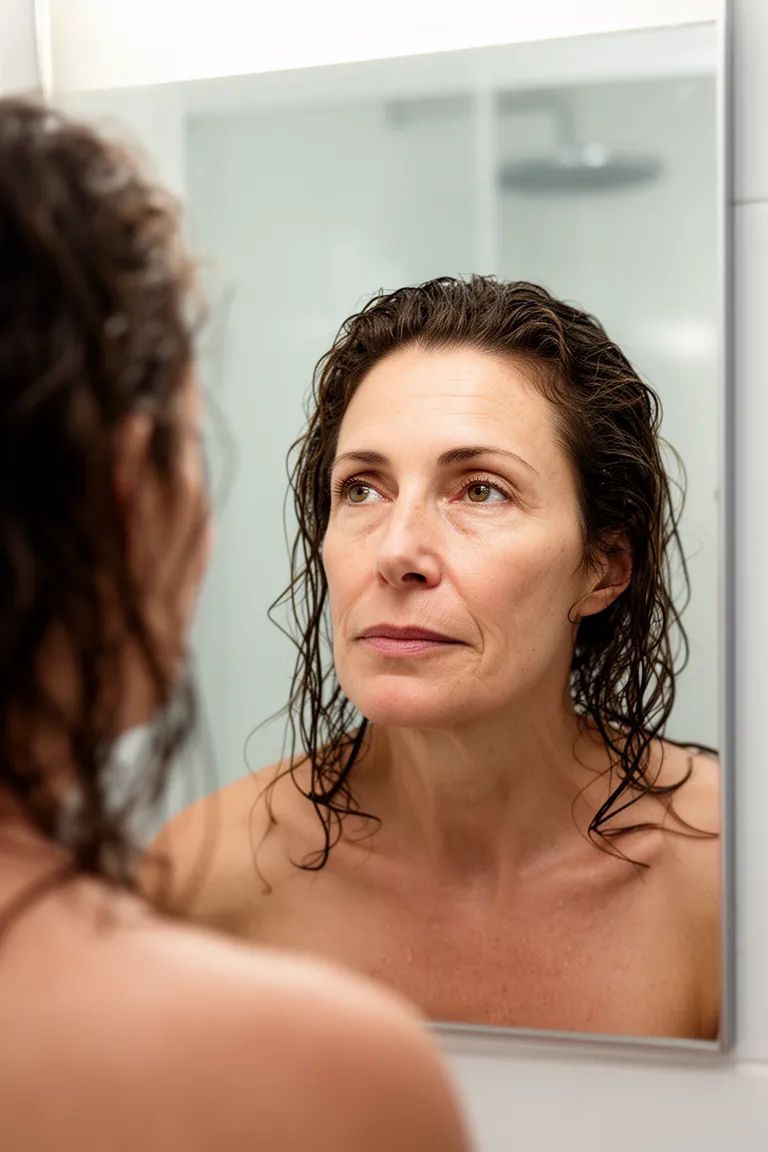
I was standing in front of the bathroom mirror, just after my morning shower, when the light hit my face in that unforgiving way it sometimes does. I was 42. I’d been a diligent student of skincare for years. My diet was full of greens and protein, my water bottle was my constant companion, I never missed my morning SPF, and I religiously applied serums and creams that promised to firm and lift. Yet, there it was. My skin, while clear, lacked that resilient bounce. It looked a little tired, a little… less. The contours of my jawline seemed softer, my cheeks didn’t spring back as quickly when I pressed them. A wave of frustration washed over me. I was doing everything right. Why wasn’t it working?
I felt like I was failing at my own body. I’d invested in expensive collagen supplements and jars of firming cream that promised “visibly tighter skin in 4 weeks.” I’d been patient. I’d been consistent. And yet, my skin elasticity after 40 seemed to be on a one-way trip south, no matter how healthy my lifestyle was. I started to wonder if I was being wildly impatient or if I was just expecting too much from my routine. Was this simply what 42 looked like, and I needed to accept it? Or was there a timeline I didn’t understand?
That moment of quiet frustration in the bathroom was my turning point. It pushed me to stop chasing quick fixes and start asking better questions. What I discovered wasn’t a magic product, but a fundamental shift in understanding. Restoring skin elasticity after 40 isn’t about a single miracle; it’s about understanding a slower, deeper biological process and committing to a realistic plan. And the most important question I had to answer was: how long does this actually take?
The Moment I Realized My Routine Wasn’t the Problem
For months, I blamed my products. Maybe my moisturizer wasn’t rich enough. Maybe I needed a stronger retinol. I’d swap one item out for another, waiting for that “wow” moment that never came. The surface would look plumper for a few hours after application, but by afternoon, that subtle sag and lack of firmness returned. I felt stuck in a cycle of hope and disappointment, convinced I just hadn’t found the right combination yet.
The breakthrough came during a visit to a dermatologist for a completely unrelated issue. Casually, I mentioned my frustration—how I was eating well, exercising, using sunscreen, and still seeing my skin lose its fight. She listened and then said something that changed my entire perspective: “You’re not doing anything wrong. You’re fighting a natural, internal slowdown. The tools you’re using are good, but you’re judging them on a timeline meant for hydration, not for rebuilding.” She explained that healthy habits are the essential foundation, but they don’t halt the biological clock of collagen and elastin production. My routine wasn’t the problem; my expectations were. Realistic improvement after 40 isn’t about stopping time, but about supporting your skin’s slower, more deliberate pace of renewal.
What Actually Happens to Skin Elasticity After 40
I left that appointment and dove into research, needing to understand the “why” behind what I was seeing. I learned that our skin is like a mattress. In our youth, the springs (collagen and elastin fibers) are tight and bouncy, and the padding (hyaluronic acid and other support structures) is thick. After 40, a few key things happen. First, our fibroblast cells, the little factories that produce collagen and elastin, start to slow down their production dramatically. We’re simply making less of the structural support.
Second, the collagen we do have starts to degrade faster and becomes more disorganized—think of those mattress springs getting weak and tangled. Add in decades of cumulative sun exposure (photoaging), which silently breaks down elastin, and the hormonal shifts of perimenopause, which can thin the skin and reduce oil production, and you have a perfect storm. This isn’t a personal failure; it’s biology. My skin wasn’t “bad” because I’d failed. It was behaving exactly as skin does at this stage of life, even with a great lifestyle. This is exactly why I’d see so many women saying their skin elasticity after 40 wasn't improving despite a healthy lifestyle—they were fighting a multi-pronged biological shift, not just surface dryness. Functional integrity of aging skin, from cutaneous biology to anti-aging...
Why Moisturizer Made My Skin Look Better but Didn’t Truly Tighten It
This was my biggest “aha” moment, and it explains why so many of us feel like we’re trying everything and still have loose skin after 40. I was conflating hydration with firmness. My moisturizers and hyaluronic acid serums were excellent at drawing water into the outer layer of my skin. This created temporary plumping, which smoothed fine lines and made my skin look dewy and healthier—and that’s a valuable thing! But it’s like watering a plant: it perks up the leaves, but it doesn’t strengthen the roots or the stem.
The firming creams I’d pinned my hopes on often relied on this temporary effect or ingredients that caused minor swelling. They didn’t penetrate deeply enough to signal my fibroblast cells to produce new collagen. I also had to reckon with collagen supplements. The evidence for them is modest and highly variable; they might provide some building blocks, but they aren’t a direct ticket to tighter skin. I realized I was spending money on surface-level fixes and wondering why I wasn’t seeing deeper structural change. The real work of restoring skin elasticity happens in the dermis, far below where a basic cream can reach.
| Approach | What It Does | Realistic Timeline for Firmness | Key Insight From My Journey |
|---|---|---|---|
| Lifestyle & Surface Hydration | Supports overall health & temporarily plumps skin | Minimal direct impact on elasticity; improves appearance in days | The crucial foundation, but won’t single-handedly rebuild lost collagen. |
| Targeted Topical Actives (e.g., Retinoids, Vitamin C) | Signals skin cells to produce new collagen & elastin | 8–12 weeks for initial texture; 3–6+ months for visible firmness | This is where real change happens. Patience is non-negotiable. |
| Professional Treatments (e.g., Microneedling, Radiofrequency) | Creates controlled injury or heat to stimulate deep collagen remodeling | Varies; often a series over 3-6 months for cumulative results | A powerful accelerator after topicals have laid the groundwork. |
| Combined Approach (All of the above) | Multi-layered support from prevention to deep rebuilding | Most sustainable path; firmness improves progressively over 6+ months | This was my eventual, realistic plan—not a quick fix, but a lasting shift. |
The Shift That Changed Everything: From Surface Care to Dermal Signaling
Armed with this new understanding, I stopped shopping for “firming” promises and started looking for ingredients proven to communicate with my skin’s rebuilding machinery. The star player here, backed by decades of research, is retinoids. I learned that retinoids, like retinol, work by binding to receptors in our skin cells and essentially giving them a gentle but firm pep talk. They accelerate cell turnover, yes, but more importantly, they inhibit collagen breakdown and stimulate the production of new, fresh collagen and elastin.
This wasn’t a quick plumping effect. This was a long-term renovation project at the structural level. I learned about other supporting actors like vitamin C (which protects existing collagen and helps make new one) and peptides (short chains of amino acids that can signal skin repair). My routine shifted from a scattershot approach of trying every new thing to a targeted, evidence-based strategy focused on these key players. This was the plan for how to improve skin elasticity after 40 when nothing seems to work on the surface. I followed an anti aging skincare routine and saw no results.
How Long It Took Before I Could See a Real Difference
This is the question I desperately needed answered, and I’ll be brutally honest because no one was with me. When you start working on the dermal layer, you need to trade impatience for persistence. Here’s my personal experience restoring skin elasticity after 40, which aligned perfectly with what the science suggests.
Weeks 1-4: The “purge” or adjustment period. My skin got a bit flaky and irritable as it adapted to my new retinoid. I focused on barrier support—gentle cleansing, rich moisturizers, and patience. Any “glow” was from good hydration, not firmness. I had to constantly remind myself: this irritation was a sign of activity, not failure.
Weeks 5-8: The texture began to change. My skin felt smoother, more refined. Some of the fine lines around my eyes seemed less etched. This was encouraging, but the major laxity? Still there. I had to remind myself this was a marathon. I’d press my cheek and it still had that slow return I hated.
The 12-Week Mark: This was the first time I looked in the mirror and thought, “Huh, something is different.” It wasn’t dramatic. It was subtle. The skin on my cheeks looked a bit more supported, less “resting” on my face. It had a denser quality. This is the timeline where visible improvement from a consistent topical routine often starts to show. It was the answer to how long does retinol take to improve skin elasticity after 40—about three months for the first real hint.
Months 4-6: The cumulative effect became clearer. The resilience improved. When I smiled, my skin bounced back faster. The overall tired, loose look had diminished significantly. This is the timeline for meaningful collagen remodeling. I finally understood why I’d been disappointed at month one—I was judging a years-in-the-making process on a hydration timeline. This was my realistic timeline for improving skin elasticity in your 40s. best dermatologist approved anti wrinkle cream when retinol irritates my face.
Scientific Evidence
The Skin-Elasticity Plan I Could Actually Maintain at 42
Sustainability was key. I couldn’t maintain a 10-step routine that took an hour. My plan became simple, consistent, and focused on the fundamentals that signal collagen production and protect existing structure.
My Morning Non-Negotiables: Prevention & Protection A gentle vitamin C serum followed by a moisturizer with ceramides to support my barrier, and finally—always—a broad-spectrum SPF 30 or higher. Sun protection is the single most important step to prevent the breakdown of the collagen you’re working so hard to build. I learned this wasn't optional; it was the guardrail for my entire plan.
My Evening Foundation: The Rebuilding Shift After double-cleansing, I use my retinoid. I started slowly (twice a week) and gradually built up tolerance. On nights off, I use a peptide serum or a soothing moisturizer. That’s it. I don’t layer multiple actives. I let the retinoid do its deep work. Simplicity meant I never skipped it, even when tired. firming skin treatment for women over 40.
The Lifestyle Layer: The Internal Support System I doubled down on what I was already doing but with purpose. Protein at every meal for amino acids. Sleep for cellular repair. Managing stress (a huge collagen degrader). I viewed my collagen supplements not as a magic pill, but as a potential supportive piece of the puzzle, with realistic expectations. I stopped expecting them to perform miracles and instead saw them as part of the choir, not the soloist.
Letting Go of Perfection and Embracing Realistic Progress
The most profound change wasn’t just in my skin; it was in my mindset. I stopped searching for my 25-year-old skin in the mirror. Instead, I looked for health, resilience, and slow, steady improvement. I took monthly photos in the same light, not to obsess over daily changes, but to track the gradual shift over quarters, not weeks. When I compared a month-one photo to a month-six photo, that’s when I saw it—not a transformation, but a quiet firming up.
I learned that my experience restoring skin elasticity after 40 was a journey of patience. The frustration of feeling like you’re doing everything right is valid. The disappointment when a firming cream fails is real. But by understanding the biology, focusing on dermal-signaling ingredients like retinoids, and committing to a realistic timeline of 3 to 6 months for true change, you move from a cycle of hope and disappointment to a path of empowered, consistent care. The bounce doesn’t come back overnight. But with the right plan and the right expectations, it can, slowly and surely, find its way back.
Frequently Asked Questions
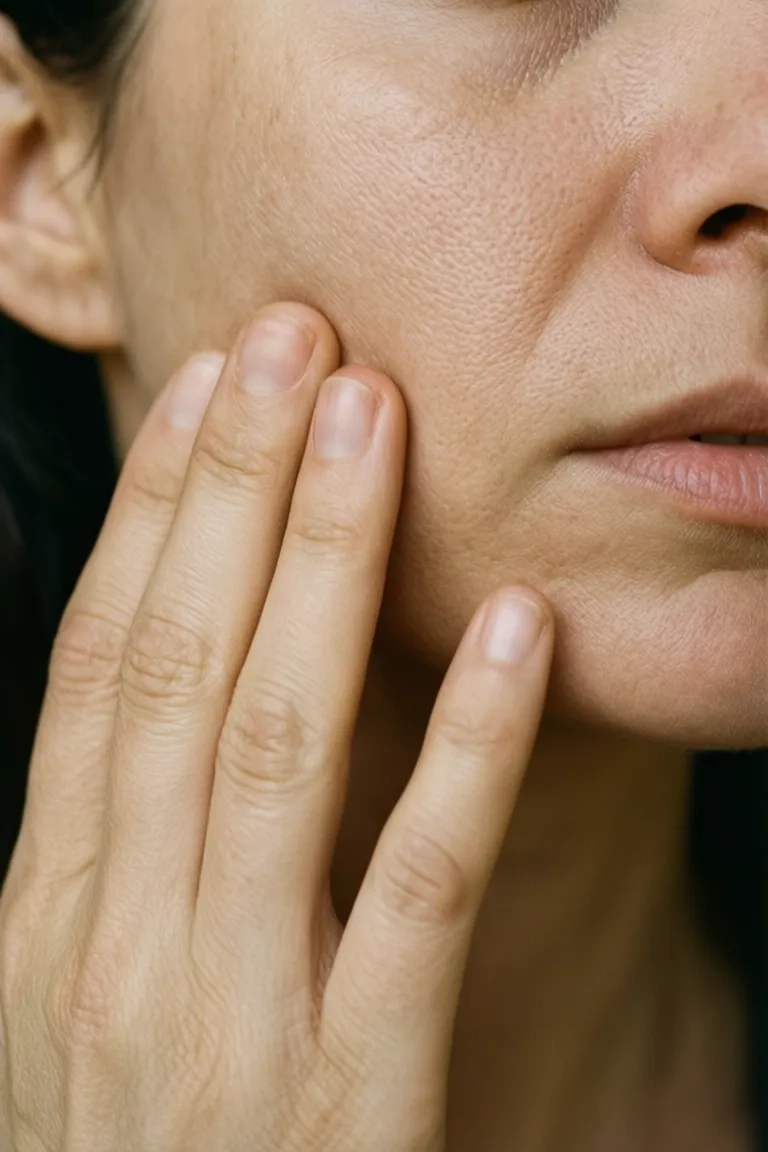
Q: How long does it take to see results from retinol for skin elasticity after 40? A: It’s important to manage expectations. You might see improvements in texture and fine lines within 8-12 weeks. However, for noticeable improvements in firmness and elasticity—the deeper structural changes—you need to think in terms of 3 to 6 months of consistent, nightly use. Retinol works by gradually stimulating new collagen, which is a slow biological process. Don't judge it on a moisturizer's timeline.
Q: I have a healthy lifestyle. Why isn't my skincare routine improving skin elasticity after 40? A: This was my exact frustration! A healthy lifestyle is the crucial foundation that prevents further damage and supports overall skin health. However, it doesn't directly signal your skin to produce significant new collagen after production has naturally slowed. Topical ingredients like retinoids or professional treatments are often needed to actively trigger that rebuilding process. You're not doing anything wrong; you likely just need to add a targeted collagen-stimulating element to your excellent base.
Q: Am I wasting money on firming creams after 40? A: Not entirely, but it depends on your goal and expectations. Many firming creams are excellent moisturizers that can temporarily plump the skin by improving hydration, which reduces the appearance of fine lines and can make skin look tighter for a few hours. However, if you're expecting them to significantly lift or restore lost elasticity at a structural level, you may be disappointed. For that, look for creams containing retinoids, peptides, or other ingredients with clinical data for collagen support, and pair them with the realistic 3-6 month timeline.
Q: When should I consider professional treatments for skin elasticity? A: If you’ve been consistent with a good topical routine for 6-12 months and want to see further improvement, or if you’re dealing with more pronounced laxity that topicals can't address, it’s a great time to consult a dermatologist. Procedures like microneedling, radiofrequency, or laser resurfacing work on a deeper level to stimulate collagen and can provide significant results, often with a more defined timeline (e.g., a series of treatments over a few months). They are a powerful next step when topicals alone have plateaued.
Q: What’s the most common mistake people make when trying to restore elasticity? A: Impatience and inconsistency. Switching products every few weeks, skipping sunscreen, or using actives so aggressively that they damage the skin barrier will sabotage progress. The key is choosing a simple, evidence-based routine (think: retinoid, vitamin C, SPF, moisturizer) and sticking with it diligently for a minimum of 3-6 months to allow your skin the time it needs to rebuild from within. Trust the slow, quiet work of biology.
📌 Love this guide? Save it on Pinterest!
Pin Skin Elasticity After 40: My Realistic 2026 Timeline & What Works to your board so you can come back to it later.

