
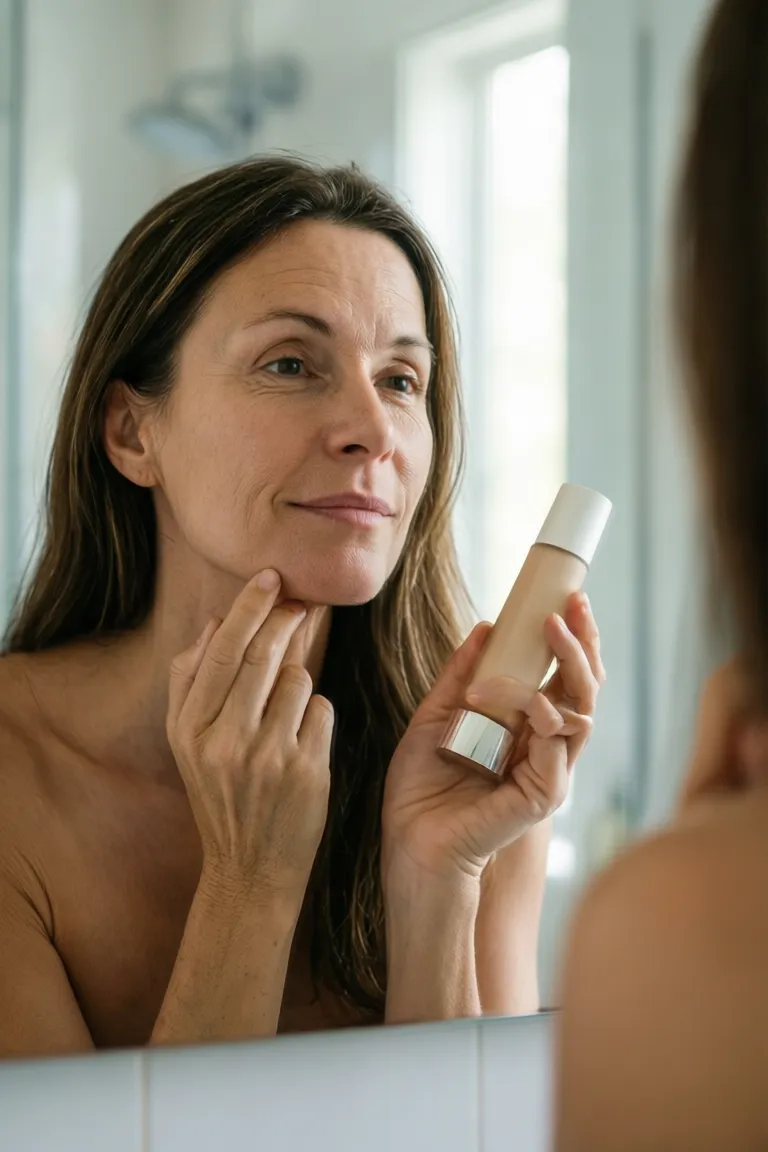
It started, as so many of my skincare quests do, in the quiet glow of my bathroom light after 10 PM. I leaned in close to the mirror, tracing the faint but undeniable lines fanning out from the corner of my eye with my fingertip. At 48, these weren’t the dramatic wrinkles of caricature; they were the subtle, creeping signatures of a life well-lived—laughing, squinting at my kids’ soccer games, years of morning sunshine on my face. But that didn’t mean I had to simply surrender to them. I’d heard whispers about Skinception for a while, from a friend who swore by its gentle yet effective approach for "mature" skin like ours. The seed was planted.
Feeling that familiar mix of hope and determination, I did what any modern, convenience-seeking person would do: I opened the Amazon app. Typing “Skinception” felt like the first step on a well-paved path. There it was—multiple listings, promising fast Prime shipping, some even with a coupon box to click. My finger hovered over the “Add to Cart” button. It was so easy. This was my initial temptation, the siren song of a familiar, one-click solution to a deeply personal concern. But something held me back—a tiny, nagging voice born from past disappointments with online beauty buys. That hesitation, that moment of vulnerability where I admitted I might not know the safest route, ended up being the most valuable skincare decision I made all year. It was a lesson in trusting my gut over my impatience, and it completely changed how I buy anything meant for my skin.
My Initial Temptation: Why Amazon Seemed Like the Easy Choice for Skinception
Honestly, why wouldn't Amazon be the first stop? For years, it’s been my default for everything from cat food to books to weirdly specific kitchen gadgets. The allure is powerful and deeply ingrained. First, there’s the speed. As a busy woman juggling work and family, the promise of two-day (or even same-day!) delivery feels like a magic trick. I could order Skinception tonight and potentially start my new regimen by the weekend. That immediacy is intoxicating when you’re staring down a new line that wasn’t there last month, a physical reminder of time passing that you want to address now.
Then, there's the perceived safety of the platform itself. Amazon feels big, established, and trustworthy. Their return policy is generally good, and the review system offers a crowd-sourced sense of security. I could scroll through hundreds of reviews for Skinception on Amazon and get a "feel" for it. Furthermore, my brain did the quick math: list price on some official sites versus a potentially lower price with an Amazon coupon. Could I snag a deal? This habit of starting my product searches on massive marketplaces is reflexive, a shortcut in a world overloaded with choices. It seemed efficient, smart even. In that moment, buying Skinception on Amazon wasn't just a purchase; it felt like the logical, modern solution to my skincare anxiety. I was tired of researching, tired of wondering. I just wanted the product in my hands, and Amazon promised the shortest bridge between my desire and my doorstep. It’s a feeling I know so many of us share—that craving for a simple solution to a complex, emotional need.
The Red Flags I Noticed: What Made Me Hesitate Before Clicking 'Buy Now'
Just as my thumb was about to commit to the screen, I paused and actually started reading instead of just reacting. That’s when the veneer of convenience began to crack. The first thing I noticed was the dizzying array of seller names. The listing said "Skinception," but the seller was something like "HealthBeauty_World_Store" or "GlobalWellnessDeals." None of these names matched the official brand I had seen referenced in articles. It felt anonymous, like buying a supposedly designer handbag from a stall in a chaotic bazaar. Where did this bottle come from? How long had it been sitting in their warehouse?
Scrolling deeper, I started paying attention to the reviews themselves, not just the star rating. Nestled among the positive feedback were concerning one-star comments that made my heart sink. Phrases like “received a half-empty bottle,” “texture seems off,” “no effect, wondering if this is real,” and the dreaded “I suspect this is a fake Skinception product.” These weren't complaints about the product not working for someone's skin type; these were direct challenges to the item's very authenticity. One person even mentioned the serum having a strange, chemical smell nothing like the sample they’d once tried. I also saw confusing discrepancies in the product images uploaded by different sellers—slight variations in box design or font that you wouldn’t expect from a standardized brand. The final red flag was the wild price swings. One seller would have it for $49.95, another for $29.99, and a third for $69.00. That “too good to be true” feeling settled heavily in my stomach. What was I actually going to receive? A watered-down version? An expired batch? A complete counterfeit? The risk suddenly felt deeply personal. This wasn’t a phone charger that might fail; this was a formulation I’d be massaging into the thin, delicate skin around my eyes. My vulnerability in that moment transformed from a fear of aging to a fear of causing harm.
The Deeper Dive: Understanding Commingling and Why It Matters for Skincare
My curiosity was officially piqued, and a little frantic Googling led me down a rabbit hole that explained everything. I learned about a practice called “commingling” or “stickerless comminglement” on platforms like Amazon. Here’s how it works in simple terms: multiple sellers send their inventory of the “same” product (say, Skinception serum) to an Amazon fulfillment center. To save space and streamline shipping, Amazon often bins all these supposedly identical items together. When you order, a worker grabs one from the bin—it could be from the legitimate seller, or it could be from a counterfeiter who sent in fake stock. There’s no way for you, the buyer, to know which one you’ll get. The barcode is the same, but the contents are a gamble.
This was the missing piece. It explained why even buying from a seller with good ratings was no guarantee. Their genuine product could be sitting in a bin right next to a fake Skinception product from a shady supplier. For a non-critical item, maybe I’d roll the dice. But for skincare? The active ingredients in anti-aging products are delicate. Vitamin C degrades with heat and light. Peptides lose potency. A fake could contain anything from inert fillers to irritants. This wasn’t just about not seeing results; it was about potentially damaging my skin barrier or causing a reaction that would set me back months. This knowledge shifted my entire perspective. The question was no longer “Which seller has the best price?” It became “How do I guarantee I get the real, fresh, properly handled formula from the source?”
Unpacking the 'Official Store' Advantage: Beyond Just Price (Authenticity, Guarantees, and Support)
Spooked by the Amazon minefield, I took the extra five minutes to search for "Skinception official website." What I found there wasn’t just a sales page; it was a masterclass in why buying direct matters for something you put on your skin. The most profound advantage was the guaranteed authenticity. This wasn't a bottle that had been sitting in a third-party warehouse under who-knows-what conditions. This was a product shipped directly from the source, with its formulation integrity intact. For skincare, freshness and proper handling are not luxuries; they are essential for efficacy. A vitamin C serum stored in a hot warehouse for months is useless, and paying even a discount price for a dead formula is a 100% waste.
Beyond the bottle itself, the value shifted to the ecosystem surrounding it. The official site clearly outlined a robust money-back guarantee, something often murky or non-existent with third-party sellers. I knew exactly what the return window was and that I’d be dealing with the company itself, not a random reseller who might ghost me. I also discovered exclusive offers and bundles only available direct. But more importantly, I saw access to real customer support. If I had questions about layering products, or if my sensitive skin reacted, I could contact experts who knew the brand inside and out. This peace of mind carried a value that no Amazon coupon could match. I wasn't just buying a cream; I was buying confidence, support, and a direct line to the people who made the thing. It transformed the transaction from a risky gamble into a considered investment in my skin’s health.
| Where You Buy | Best For | Realistic Risk Level | Key Consideration |
|---|---|---|---|
| Official Brand Website | Guaranteed authenticity & fresh stock | Very Low | Highest confidence, direct support, often best long-term value with guarantees. |
| Authorized Retailer (e.g., select department stores) | Convenience with verified sourcing | Low | Ensure they are listed as authorized on the brand’s official site. |
| Major Online Marketplace (3rd-Party Seller) | Price hunting (with extreme caution) | High | Risk of commingling, counterfeits, expired goods, and poor support. |
| Unfamiliar Discount Site | Extreme bargain seekers | Very High | High likelihood of counterfeit, expired, or tampered products. |
My Experience: How Buying Directly Changed My Confidence in Skinception (and My Skin)
The difference was palpable from the moment the box arrived. It felt curated, with clear branding and information, not just tossed in a generic Amazon mailer. Unboxing the serum and moisturizer, I checked the batch codes against the information on the site—a simple verification step that felt reassuring. The packaging was pristine, the seals intact. Starting the regimen, there was no underlying whisper of “is this real?” poisoning my mindset. That psychological shift was huge. I could attribute any results or sensations purely to the product itself, not to doubts about its provenance. I was able to be patient, to follow the instructions faithfully without that nagging fear sabotaging the process.
By week three of consistent use, I began to notice the subtle changes I’d hoped for. The skin around my eyes felt plumper, more hydrated, and those fine lines seemed… softer, less etched. It wasn’t a miracle erasure, but a gentle softening, like the difference between a sharp pencil line and one drawn with charcoal. The product absorbed beautifully, with a texture that felt high-quality and potent, not sticky or suspiciously thin. When I later had a question about whether to apply the serum before or after a retinol I was using (on different nights), I used the official site’s contact form. The detailed, personalized reply I got within 24 hours from their support team cemented my feeling that I’d made the right choice. This experience buying Skinception from the official site transformed it from a mere product into a trusted part of my self-care ritual. The confidence in its authenticity directly fueled my confidence in its results. I was no longer just a customer; I felt like I had a partner in my skincare journey.
Scientific Evidence
The Ripple Effect: How This Changed My Approach to All Skincare Purchases
This single experience with Skinception didn’t just solve one purchase dilemma; it rewired my entire approach to buying skincare and wellness products online. I realized my old habit of starting on Amazon was based on a flawed assumption: that convenience and safety were the same thing. Now, my first step for any new product is a direct search for the official brand presence. I look for that official website discount or bundle, sure, but more importantly, I look for their story, their philosophy, and their stated authorized retailers.
I’ve become a label and batch code checker. When any skincare product arrives, I immediately look for manufacturing dates and lot numbers. I compare packaging minutiae—the font, the color saturation, the quality of the printing—to official images. I’ve learned that if a deal seems astronomically good on a site I’ve never heard of, it’s almost certainly a sign to run, not a sign to celebrate. This vigilance isn’t about being paranoid; it’s about being empowered. It’s taking back control in a market that can sometimes feel designed to confuse. My skin is my largest organ, and what I put on it matters. This journey taught me that being an educated consumer is one of the most powerful steps I can take. Skin aging from mechanisms to interventions: focusing on dermal aging highlights the complex biological processes involved in skin changes over time.
Don't Make My Almost-Mistake: A Quick Guide to Safely Buying Skincare Online
My journey taught me that being an informed consumer is the best ingredient of all. Here’s my quick guide so you can avoid the headache I almost bought, whether you’re looking for Skinception or any other premium skincare.
How to Identify Official Retailers: For any skincare brand, your first move should be a direct web search for “[Brand Name] official website.” Look for verified social media badges (the little blue check) and check if the brand’s official social media links directly to that site. Some legitimate brands do have controlled storefronts on Amazon. The key is to navigate to it FROM their official site, not find it by accident. If you’re on Amazon, the “Ships from” and “Sold by” fields must say the brand’s name, not a third party.
Vet Third-Party Sellers Relentlessly: If you do consider a marketplace seller, treat it like a job interview. Check their seller profile name, their years on the platform, and most critically, their feedback percentage. But don’t stop there. Click to read the negative and critical reviews specifically. Are people complaining about fakes, expired products, terrible service, or broken seals? That’s your data. Run. Also, be wary of listings that use only generic stock photos; legitimate sellers often show their own photos of the actual product packaging.
Understand Your Protections and Take Action: Know the marketplace’s return policy for that specific seller, not just Amazon’s general policy. When your product arrives, inspect it immediately before you even break the seal. Check for security seals, batch codes, and expiration dates. Compare the packaging to images on the brand’s official site. If anything feels off—the smell, the consistency, the labeling feels cheap—stop. Contact the manufacturer directly with photos. They want to know about counterfeits damaging their reputation. Reporting a suspected fake protects not just you, but other consumers down the line. Ultimately, for high-efficacy skincare that you’re trusting with your face, the safest, most rewarding path is almost always a direct one to the source.
Frequently Asked Questions
Q: I’m still tempted by the price I see on Amazon. Is it ever safe to buy Skinception there? A: I totally get the temptation—I was right there with you. It can be safe, but it requires detective-level diligence. The only scenario where I’d feel a flicker of confidence is if I could verify, without a doubt, that the seller is the official Skinception storefront sanctioned by the company. You must check the "Ships from" and "Sold by" fields. If it says anything other than "Skinception" or the parent company name, the risk of receiving a commingled, counterfeit, or old product is real. For me, the mental energy of that verification, and the lingering doubt, just wasn’t worth it. My hard-earned peace of mind came from buying direct.
Q: What are the real risks of buying a fake skincare product? It can’t be that bad, can it? A: This was my biggest wake-up call. The risks go far beyond wasting your money on something ineffective. A counterfeit product is unregulated. It could contain harmful ingredients like heavy metals, steroids, unapproved dyes, or bacterial contaminants because it’s made in unsanitary conditions. At best, it will be an inert, ineffective concoction that does nothing for your skin. At worst, it could cause severe allergic reactions, chemical burns, persistent rashes, acne flare-ups, or long-term damage to your skin barrier. When you're dealing with your skin's health, especially around sensitive areas like the eyes, authenticity isn't a luxury; it's a non-negotiable necessity for safety.
Q: I saw a much cheaper price for Skinception on a different website. Is it a good deal? A: My rule of thumb, forged from this experience, is this: if a price seems "too good to be true" for a premium skincare product, it almost always is. Dramatic discounts on standalone websites you’ve never heard of are major red flags. They often indicate old stock nearing expiration, counterfeit goods, or products that have been improperly stored (like in a hot warehouse), which degrades active ingredients. The compounds in quality skincare are expensive to source and formulate correctly. A legitimate 10-20% off promotion from the official Skinception website is one thing; a random site slashing 60-70% off the price is a signal to close the tab.
Q: How can I tell if the Skinception I already received is authentic? A: First, don’t panic. Start by comparing the packaging precisely to high-resolution images on the official website—look at fonts, colors, logos, and even the spacing of letters. Check for security seals on the box and bottle; are they intact or tampered with? Every genuine product should have a lot number or batch code printed or etched on it. You can often contact the official customer service team with this code to verify production date and authenticity. Finally, trust your senses. Does the product’s texture, scent, and color match the descriptions in genuine reviews from the official site or trusted bloggers? If it feels drastically different—watery when it should be creamy, smells rancid or overly chemical—those are your instincts telling you something is wrong.
Q: What if I buy from the official store and it doesn’t work for my skin? A: This is actually one of the most comforting advantages of buying direct. The official Skinception store typically offers a clear, straightforward money-back guarantee or return policy (always double-check the current terms before buying). This means you can try the product with true confidence, knowing that if it’s not compatible with your unique skin chemistry, you have a clear and direct path to a refund. This safety net is rarely offered, or is much more complicated and fraught to navigate, when purchasing through unauthorized third-party sellers who may have their own restrictive rules or simply disappear.
Q: Beyond authenticity, what other hidden benefits come from buying directly? A: You’re buying into the full ecosystem of the brand. This includes direct customer support from people who are (or can consult) product experts, not just general customer service agents. You often get detailed usage instructions, access to blogs or guides about complementary products, and first dibs on new launches or clinical insights. Many official sites also have loyalty programs, exclusive bundles that offer better value per ounce, and samples of other products in their line. Perhaps most importantly, you’re virtually guaranteed to receive the freshest possible product directly from the manufacturer's controlled inventory, which means maximum potency and shelf life from the moment you open it.
📌 Love this guide? Save it on Pinterest!
Pin Skinception: Official Store vs. Amazon 2026 - Avoid Fakes! to your board so you can come back to it later.

